What a Termite Inspection Looks Like Before Closing on a Chattanooga Home
Posted by Mosquito Squad Plus
June 17, 2026
You found the house. You can almost pronounce Ooltewah the way the locals do, and you have already signed your name more times than you can count. Somewhere in that mountain of paperwork is a form called a termite letter. You glance at it, you see the word clear, you sign, and you never think about it again. That is exactly how it is supposed to feel, and that is also the problem.
Two out of every three people buying a house in Hamilton County right now came from somewhere else. They are moving in from states where the termite math is nothing like it is here, and most of them have never had a single reason to think about what is going on underneath a house. Then a stranger crawls around in the dirt under it for an hour, signs a piece of paper, and the whole thing gets folded into the closing stack like it is the same as the flood disclosure. It is not. That one form is worth understanding, and this is the post that explains why.
The Chattanooga metro area has been growing at more than twice the national rate, with the population on track to cross 600,000 in the late summer of 2026, and almost all of that growth comes from people moving in from other parts of the country. About 66 percent of newcomers to Hamilton County arrive from out of state, one of the highest shares anywhere in Tennessee. If that is you, you are not wrong about what you knew back home. You are just buying into a different set of conditions now, and the termite inspection sitting in your closing paperwork is the one document in the whole pile that exists specifically to protect you from those conditions. Knowing how to read it is worth more than people realize.
The Termite Letter Is Not a Formality. It Is a Lender Requirement.
Here is the part that catches people off guard. The termite inspection on a home purchase usually is not your idea, and it usually is not optional either. Your lender wants it. Think about it from the bank's side for a second. They are about to hand you a few hundred thousand dollars with the house itself as the collateral, and termites eat houses for a living. The bank would like some proof the thing backing their loan is not slowly being turned into sawdust. On a VA loan it is even more cut and dried. The Department of Veterans Affairs requires a wood destroying insect inspection on properties across most of the country, and Tennessee sits squarely inside the band where that applies. Plenty of conventional lenders ask for the same thing.
The form itself is the NPMA-33 Wood Destroying Insect Inspection Report, which is the standardized report licensed inspectors use everywhere in the country. It is what HUD and the VA require, and it is what most conventional lenders accept. Around a closing table everybody just calls it the termite letter or the clear letter, but the official name is the honest one. Wood destroying insects, plural. Not only termites. The form covers termites, carpenter ants, carpenter bees, and reinfesting wood boring beetles, because all of them eat wood and your lender does not want any of them in the collateral. In Tennessee, whoever signs it has to be working under a charter from the Tennessee Department of Agriculture with someone licensed in the wood destroying organisms category. We are headquartered at 10607 S Lee Hwy in McDonald and we hold that charter, which is the boring but important reason we can do the inspection for a Chattanooga area sale at all.
That signature is doing more work than the word clear is. The inspector signs with a license number, which turns the form into something a real person is on the hook for. Tennessee law backs that up. Under state statute, a wood destroying insect infestation report written for the sale of real estate records what was visible the day the inspection happened, insects and damage both, and any spots the inspector could not get to have to be written down right there on the form. Then Tennessee adds something a lot of states skip. The Tennessee Department of Agriculture requires that report to carry a ninety day warranty on the accuracy of what it says. That is a genuine safety net, and most buyers have no idea they are getting it. It is also the reason a rushed termite inspection is worse than none at all. A clear letter from somebody who never opened the crawl space is a ninety day promise about a part of the house nobody bothered to look at.
A Clear Letter and a Clean House Are Not the Same Thing
This is the one to slow down on, because it is where people actually get burned. A clear termite letter means the inspector found no visible signs of active bugs and no visible damage, on the day they were there, in the spots they could reach. Read that sentence again, because every piece of it is load bearing. It does not mean the house never had termites. It does not mean nothing is happening inside a wall or under a stretch of subfloor nobody could see. And it definitely does not mean the inspection was thorough, because the form only ever promised to report what was visible and reachable in the first place.
That accessibility limit is not some loophole inspectors hide behind. It is baked into how the report works on purpose, and it is the biggest reason two inspections on the exact same house can read identical on paper and mean totally different things. The form has a section for noting obstructions and areas nobody could reach. An honest inspector fills it in. A garage packed to the ceiling with the seller's boxes is an area nobody could reach. A crawl space hatch screwed shut behind the water heater is an area nobody could reach. A finished basement with furniture shoved against every wall is an area nobody could reach. Each one gets marked not inspected, and each one is exactly the kind of spot where the thing you are paying good money to find out about could be sitting there in the dark, perfectly happy.
When Shane runs a termite inspection, the whole job is getting to the parts of the house people skip. He gets into the corners. He does not care about cobwebs or standing water or a crawl space nobody has opened in fifteen years. He goes through with a fine tooth comb, because that is the entire point of having him there. And when there is a spot he genuinely cannot reach, he does not paper over it. He tells the buyer exactly what he could not get to and why, so they can decide whether it is worth clearing the obstruction and looking. The one thing he will not do is damage the house to get a look. He is not allowed to move insulation or tear into a wall, and he would not want to, because he respects somebody's home the same way he would want his own respected. Visual and accessible is the standard. The difference between a good inspection and a bad one is how hard the inspector works inside that standard, not whether they break it.
What Shane Is Actually Looking For Down There
People picture a termite inspection as a guy glancing at the baseboards. The real work happens in the crawl space and along the foundation, from the ground up, and it is a search for a very specific set of signs.
The first thing Shane checks in a crawl space is the moisture situation, because moisture is the whole story with the only termite that matters here. East Tennessee has eastern subterranean termites, and the University of Tennessee Agricultural Extension documents that this species needs soil contact for moisture and builds mud tubes out of soil and saliva as covered passageways from the nest to the wood it eats. That dependence on moisture is why the first thing he wants to see under a house is a plastic vapor barrier laid down over the dirt. When that barrier is missing or torn and the crawl space has no real ventilation, the ground under the house behaves like a mud hole that never dries out. Moisture builds, wood fungus follows, and the conditions line up for termites. You can read the future of a crawl space in how wet the dirt is.
Then he scans the block. He works the foundation from the ground up looking for mud tubes, those pencil width brown lines of caked soil running vertically up the masonry from the dirt toward the wood. A mud tube is not a maybe. If he sees a mud tube, he knows termites built a highway from the soil into your house, and the next question is only whether they are still using it. He breaks them open to check for live workers, but an empty tube is not an all clear either, because subterranean termites abandon and rebuild routes constantly, and old tubes leave behind an etched stain on the block that can stay visible for years. Those tube stains say the house has a history, and when he finds them he starts looking for whether anything was ever done about it, whether there is evidence of a prior treatment.
He also looks for the things that hide in plain sight. Subterranean termites will run their tubes right up the inside of a hollow block or through the center of one, so a discoloration in the wood or a soft spot where something does not look right gets pressed and probed. He checks for steel termite shields and where the colony has worked around them. He checks the sill plate where wood meets foundation, the band joist, the floor joists overhead, every plumbing and utility penetration where a pipe passes through the foundation and leaves a gap. The University of Tennessee notes that workers can move through gaps a fraction of an inch wide, which is why a real termite inspection takes time and a flashlight and a willingness to crawl.
One more thing, because a sharp buyer asks about it. Termites do not only work from the ground. The attic gets inspected too, and not because subterranean termites skip the soil. They do not. But where there is a steady moisture source up in a wall or a roofline, a leaking pipe or a chronic roof leak, a colony can sometimes sustain activity above grade, what the extension literature calls an aerial infestation, where the colony is essentially living inside the structure off that trapped water. Those situations are different to treat and are usually carved out of a standard termite warranty, which is exactly why a complete inspection looks up as well as down. If a home inspector walked the place first and called it good, Shane will still go behind them, and he still finds things, because they are inspecting the whole house and he is only inspecting for one thing.
Why This House, In This Region, Is Worth the Crawl
If you are coming from the upper Midwest or the Northeast, you are used to a climate that keeps termites in check. East Tennessee does not return that favor. Tennessee sits in Termite Infestation Probability Zone 2, the moderate to heavy band on the map that both the International Residential Code and mortgage lenders use. It is one notch below the very heavy zone that covers the Gulf Coast and the Deep South, so we are not the literal worst spot in the country, but do not let that comfort you too much. The moderate to heavy band is the exact band where the VA and a lot of conventional lenders require the inspection in the first place. The map does not call this region low risk. It calls it a place where you do not get to close until somebody looks first.
The conditions back that up. The Tennessee River valley holds humidity, the native soil runs to heavy clay that stays damp long after a rain, and mild winters never get cold enough to reset a colony. The result is termite pressure that runs a long season and never fully stops. We have written before about how that plays out in specific corridors. The new construction subdivisions around Ooltewah sit on fresh fill inside a creek watershed, and the older established homes around Cleveland carry aging crawl spaces and decades of buried wood. Both are real termite environments for completely different reasons. If you are touring houses in Hixson, East Brainerd, Collegedale, or up on Signal Mountain, you are walking through a different termite profile in each one, and the only way to know which one you are about to own is to have the structure inspected before the deal closes.
There is one piece of advice Shane gives every buyer who is new to the area, and it costs them nothing. Ask to see the termite activity for the neighborhood you are considering, not just the house. A licensed local operator can tell you what the pressure looks like across a zip code, because they are the ones who have been under the houses on those streets. People are genuinely surprised by how active some of these pockets are, and they are surprised because they did not know to ask before they were already under contract. Finding out a street runs hot for termites is far better as a thing you learn while you are still shopping than as a thing you discover after a joist starts to give.
What the Termite Inspection Cannot Tell You, and Who to Call When It Finds Something
A WDI inspection reports on insects and the damage they cause. It is not a structural engineering review. If Shane finds serious damage, he documents it in detail, he explains exactly what he is seeing and what he thinks it means, and he will almost always pull out his phone and show you pictures so the words on the form turn into something you can actually see. But if the damage is bad enough to raise a question about whether the structure is compromised, the right next call is a licensed structural engineer, not a pest control company. He will tell you that plainly. Knowing the boundary of what the report covers is part of protecting the buyer, which is the only reason any of them are out there.
If the inspection turns up an active infestation, the transaction does not automatically die, but somebody has to deal with it before the lender will move forward. Either the existing problem gets treated, or it gets treated by another company and proof of that work is provided. Treatment comes with a termite service agreement, and that agreement is the document that carries the warranty going forward. A buyer should know to ask for it and to read it, because it is the thing that protects them after they own the house.
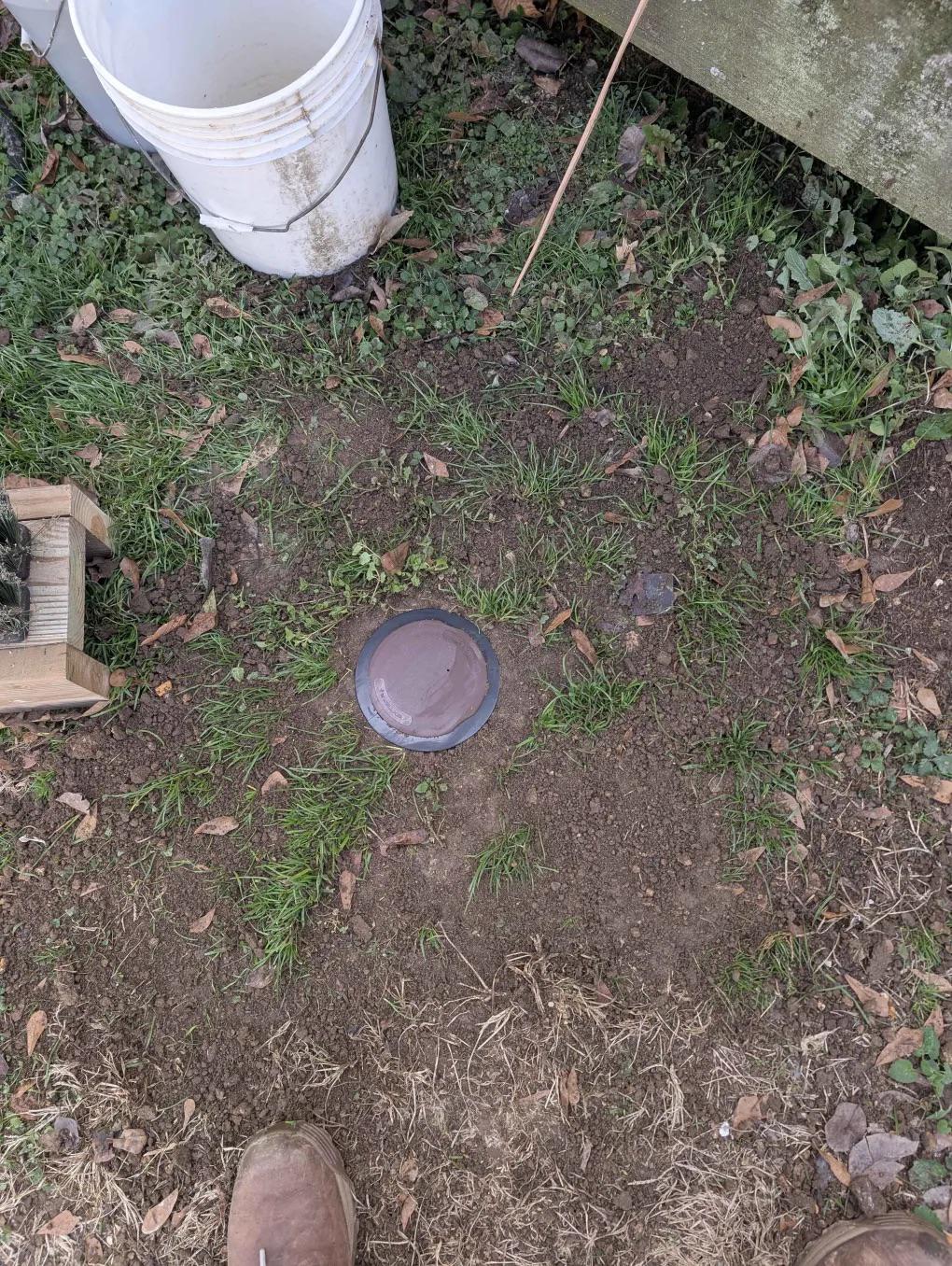
When we treat, we do it the way the extension research supports rather than picking one method and hoping. A lot of companies will do liquid only or bait stations only. We do both. If we find termites, we spot treat the active area with liquid termiticide first, then we set bait stations around the structure for the long term colony work. We deliberately do not rely on a single full liquid barrier and call it finished, because if that barrier has one gap a sheet of paper could slip through, a termite can find it too. The two approaches cover each other. And on the monitoring side, our bait stations go in loaded hot and we check them every three months. A lot of operators check once a year. Three months is a different level of attention, and on a house you just bought in a region with this much pressure, attention is the whole game.
One last thing buyers get wrong, and it is worth saying because it feels like progress when it is not. You cannot fix a termite problem by moving the wood away from the house. People pull the firewood pile off the foundation, or yank out the old pallet that was sitting against the crawl space vent, and they feel like they solved something. They did clean up a food source, which genuinely helps, but the colony does not live in the pallet. It lives in the ground. Removing the wood does not remove the termites. It just removes one of the things that drew them in. The colony is still down there, and it will find the next food source it can reach.
The Move-In Timeline, and Why Earlier Is Better
The cleanest version of this is simple. If you are buying, get the termite inspection done as early in the process as the timeline allows, not the week before closing when there is no room left to react to whatever it finds. If you are selling, having the termite inspection done before you list gives you the same advantage in reverse, because a completed report keeps the transaction moving and takes a last minute surprise off the table. Either way the inspection has the most value when there is still time to act on it.
For buyers relocating to the area who want to start clean, our year round Home Shield program covers the structure of the home alongside the other pests this valley produces, and the termite monitoring runs underneath it. The satisfaction guarantee applies to every property we service.
If you are under contract on a home in Chattanooga, Ooltewah, or anywhere across Hamilton County and into Northwest Georgia and you need the termite inspection for your lender, reach out for a termite inspection or call us at (423) 403-3513. Ask for Shane. Get the house walked by somebody who has spent years in the crawl spaces on these streets, before you sign the thing that says clear.