That Bug Zapper Isn't Doing What You Think It's Doing
Posted by Mosquito Squad Plus
July 27, 2026
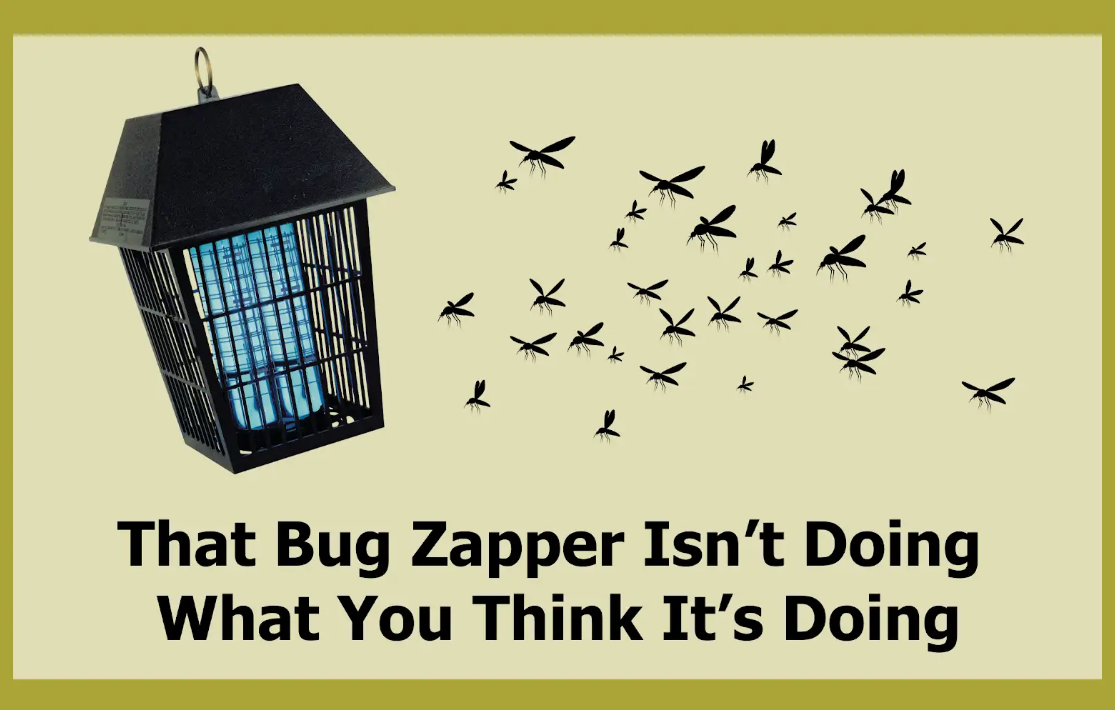
It's a Wyoming rite of passage: the porch bug zapper fires up at dusk, delivers a satisfying crack every few minutes, and you feel like you're winning. Meanwhile, you're still getting eaten alive.
Bug zappers just aren't built for the job most people buy them to do. Here's the honest breakdown of what they actually accomplish — and what works better.
What Bug Zappers Actually Kill
Bug zappers use ultraviolet light to lure flying insects into an electrified grid. For certain insects, it works reasonably well. Mosquitoes aren't really those insects.
Studies have consistently found that the overwhelming majority of what bug zappers kill are moths, beetles, midges, and non-biting flies — insects that weren't bothering you to begin with. One frequently cited University of Delaware study found that mosquitoes made up less than 6% of insects collected from bug zappers over an entire season.
There's also an ironic downside: zappers don't distinguish between pest insects and beneficial ones. Parasitic wasps and beetles that help control garden pests can all end up on the wrong side of that grid.
Why Mosquitoes Ignore the Light
Female mosquitoes — the only ones that bite — aren't hunting for light sources. They're tracking a specific set of cues: the carbon dioxide you exhale, your body heat, and the compounds on your skin. A bug zapper sitting on your deck is essentially invisible to a mosquito that's already locked onto you from 30 feet away. You are a far more compelling target than any UV bulb.
What Wyoming Conditions Mean for Mosquito Control
Southeast Wyoming's wide-open terrain means mosquitoes aren't just breeding in your backyard — they're traveling in from neighboring properties, fields, and low-lying areas. Mosquitoes can fly one to three miles in search of a blood meal. Wyoming's climate swings add another wrinkle: mosquito eggs can lie dormant in dry soil for months, then hatch rapidly when spring runoff or irrigation brings moisture. A yard that seemed fine in early May can have a full mosquito population by Memorial Day.
Passive, light-based devices aren't going to move the needle against that kind of pressure.
What Actually Works
The most effective approaches target mosquito biology directly.
Outdoor fans are one of the most underrated tools available — mosquitoes are weak fliers, and even a steady breeze from a box fan aimed at your seating area disrupts their ability to navigate toward you.
Eliminating standing water is foundational. Clogged gutters, bird baths, low spots in the lawn, and forgotten containers are all potential breeding sites. Check them after every rain.
Professional barrier treatments are in a different category altogether. Mosquitoes spend most of their time resting in shaded vegetation and dense foliage — not flying in open air. A barrier treatment applied by a licensed technician targets those resting areas directly, eliminating up to 90% of mosquitoes on contact and disrupting the breeding cycle when applied consistently throughout the season.
Mosquito Squad of Southeast Wyoming also offers a natural treatment made with essential oils — a strong option for households with kids, pets, or livestock that prefer a botanical formula.
The Bottom Line
Bug zappers can help manage moths and non-biting flies, but if mosquitoes are your primary concern, a zapper is the wrong tool for the job. It's targeting the wrong sense, killing the wrong insects, and leaving you just as exposed.
If you're serious about enjoying your Wyoming summer outside, the path forward is professional treatment — not a blue light in a cage.