Wyoming Winters Are Brutal. So Why Do Mosquitoes Always Come Back?
Posted by Mosquito Squad Plus
September 15, 2026
It's a fair question. If you've spent a January in Laramie or watched a Casper cold snap push temperatures to twenty below, it's hard to imagine how anything survives — let alone an insect the size of an eyelash.
But every spring, without fail, the mosquitoes return. Sometimes faster than you expected. Sometimes in greater numbers than the year before.
The answer isn't luck. Wyoming mosquitoes are genuinely built to outlast the winter — and understanding how they do it goes a long way toward explaining why mosquito season can catch homeowners off guard, and what you can actually do about it.
Wyoming's Winter Is Cold. Mosquito Eggs Don't Care.
The species that cause the most problems across Southeast Wyoming — primarily Aedes vexans and related floodwater mosquitoes — have a winter survival strategy that has nothing to do with warmth.
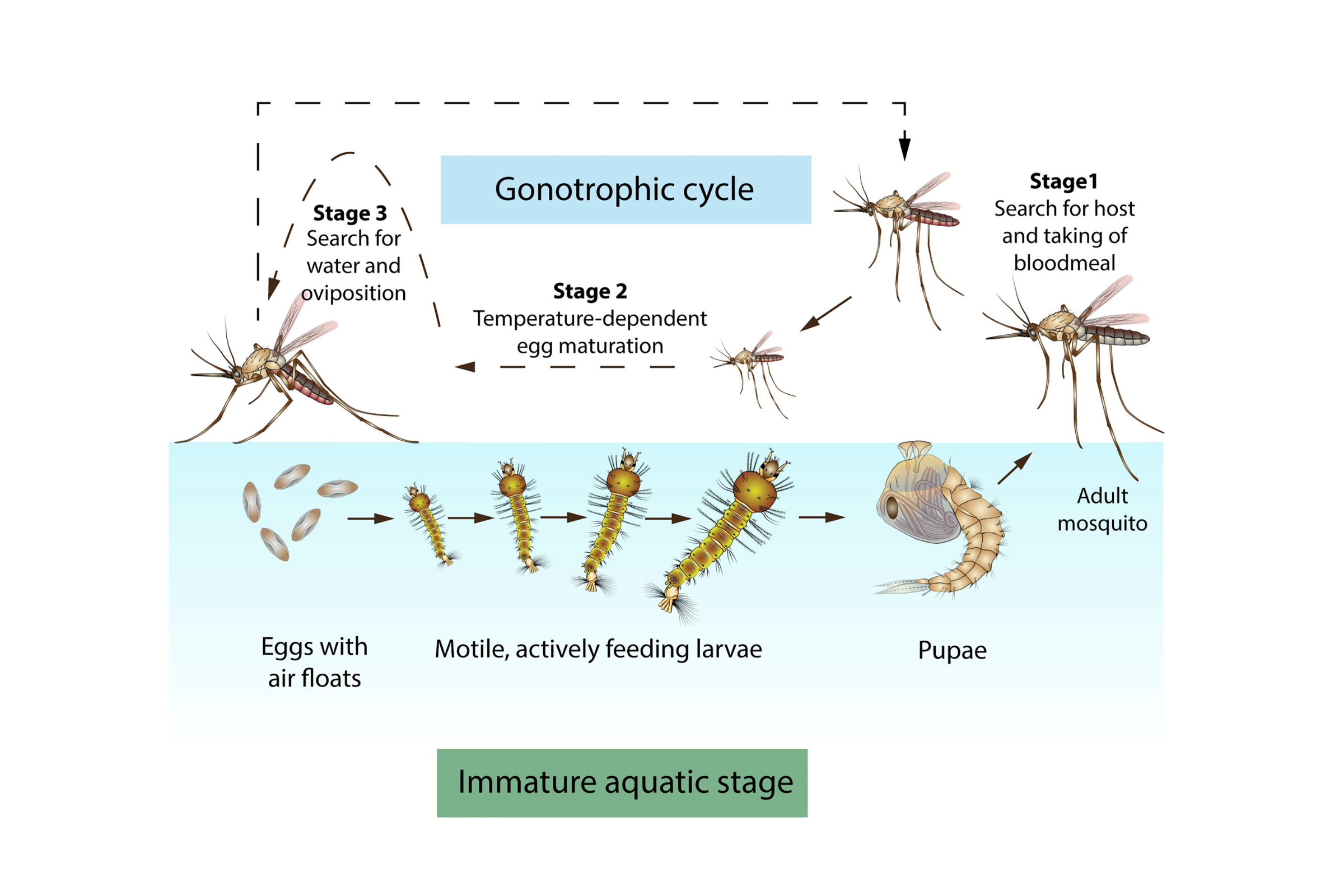
Late-season females lay their eggs in soil: along irrigation ditches, in low-lying areas of lawns, near drainage channels, along the edges of fields, and in any spot that's likely to collect water when spring arrives. Then those eggs go dormant.
What makes this remarkable is what those eggs can withstand. Aedes eggs are specifically adapted to survive desiccation and freezing. They don't need moisture to make it through the winter — they need to avoid it until the right moment. A Wyoming winter that swings between deep freezes, chinook thaws, and back again doesn't phase them. The eggs simply wait.
When snowmelt, spring rain, or irrigation saturates the soil in April or May, the trigger is pulled. Eggs that have been sitting dormant since the previous September hatch — often in large numbers, all at once.
That's why mosquito season in Wyoming doesn't ease in gradually. It arrives.
Snowpack and Spring Runoff Set the Stage
Here's where Wyoming's specific geography matters.
The snowpack that builds across the Laramie Range, the Medicine Bow Mountains, and the high country surrounding Southeast Wyoming feeds directly into the floodplains, irrigation systems, and low-lying areas where mosquito eggs are waiting. A heavy snow year followed by a rapid spring melt doesn't just mean high rivers — it means large areas of temporarily saturated soil, all triggering hatch events simultaneously.
Aedes vexans eggs are notorious for wave hatching: some hatch on the first flood event, others hold through one or two more before activating. This means a single wet spring can produce multiple population surges across the season, each one pulling from the same reservoir of eggs laid the previous fall.
The connection is direct: the worse the previous fall's population was, the more eggs are sitting in the ground. The wetter the spring, the faster and more completely they hatch.
Some Mosquitoes Don't Wait in the Soil at All
Not every Wyoming mosquito spends the winter as an egg.
Culex tarsalis — the Western Encephalitis Mosquito and Wyoming's primary West Nile virus vector — takes a different approach entirely. Female Culex tarsalis enter a state called diapause: a physiological pause in which they stop feeding, stop reproducing, and reduce their metabolism enough to survive months of cold.
They don't do this out in the open. They find sheltered, protected spots — crawl spaces, garages, sheds, areas under decks and porches, and other void spaces around structures. They tuck in and wait.
When temperatures begin to stabilize in the 50s, they emerge. And unlike floodwater mosquitoes that need to develop from egg to adult before they can bite, overwintering Culex females are already adults. They're ready to feed almost immediately.
This means that some of the first mosquitoes you encounter each spring haven't traveled from somewhere else — they've been on your property the entire winter.
What This Means for Mosquito Season in Cheyenne, Laramie, and Casper
Taken together, these two survival strategies explain a pattern that Wyoming homeowners experience every year but rarely understand:
Mosquito season doesn't start when you see the first mosquito. It starts weeks earlier, when temperatures cross the threshold and eggs begin to hatch. By the time you notice biting adults in your yard, a population has already been building — and in a spring with good snowmelt, it can build fast.
Elevation differences across Southeast Wyoming also affect timing. Casper, sitting at around 5,100 feet, may see earlier seasonal activity than Laramie at 7,200 feet. Cheyenne, at roughly 6,000 feet, lands somewhere in between. That variation means the season doesn't hit all three cities at exactly the same time — but it hits all of them, and earlier in the season than many homeowners anticipate.
Why Waiting to See Mosquitoes Is the Wrong Approach
The most common mistake homeowners make is treating mosquito control as reactive — addressing the problem once it's already visible and uncomfortable.
The biology argues strongly against that approach. By the time mosquitoes are biting regularly, the population is established. Overwintering Culex females have already been active for weeks. Multiple hatch events may have already occurred. You're managing a running problem rather than getting ahead of it.
Effective mosquito control in Southeast Wyoming starts early in the season and maintains consistent coverage throughout — because the population isn't a single event, it's a continuous cycle of new hatch waves, new activity from overwintering adults, and ongoing recruitment from the broader landscape surrounding your property.
Mosquito Squad of Southeast Wyoming's barrier treatments target the resting and breeding zones that support this cycle: shaded vegetation, dense foliage, and the sheltered areas around your home's foundation and outdoor living spaces. Applied on a consistent schedule, treatments eliminate up to 90% of mosquitoes on contact and disrupt the population cycle rather than simply chasing it.