What Boone County's Tick Risk Picture Looks Like Now, and Why Florence Homeowners Should Know
Posted by Mosquito Squad Plus
April 13, 2026
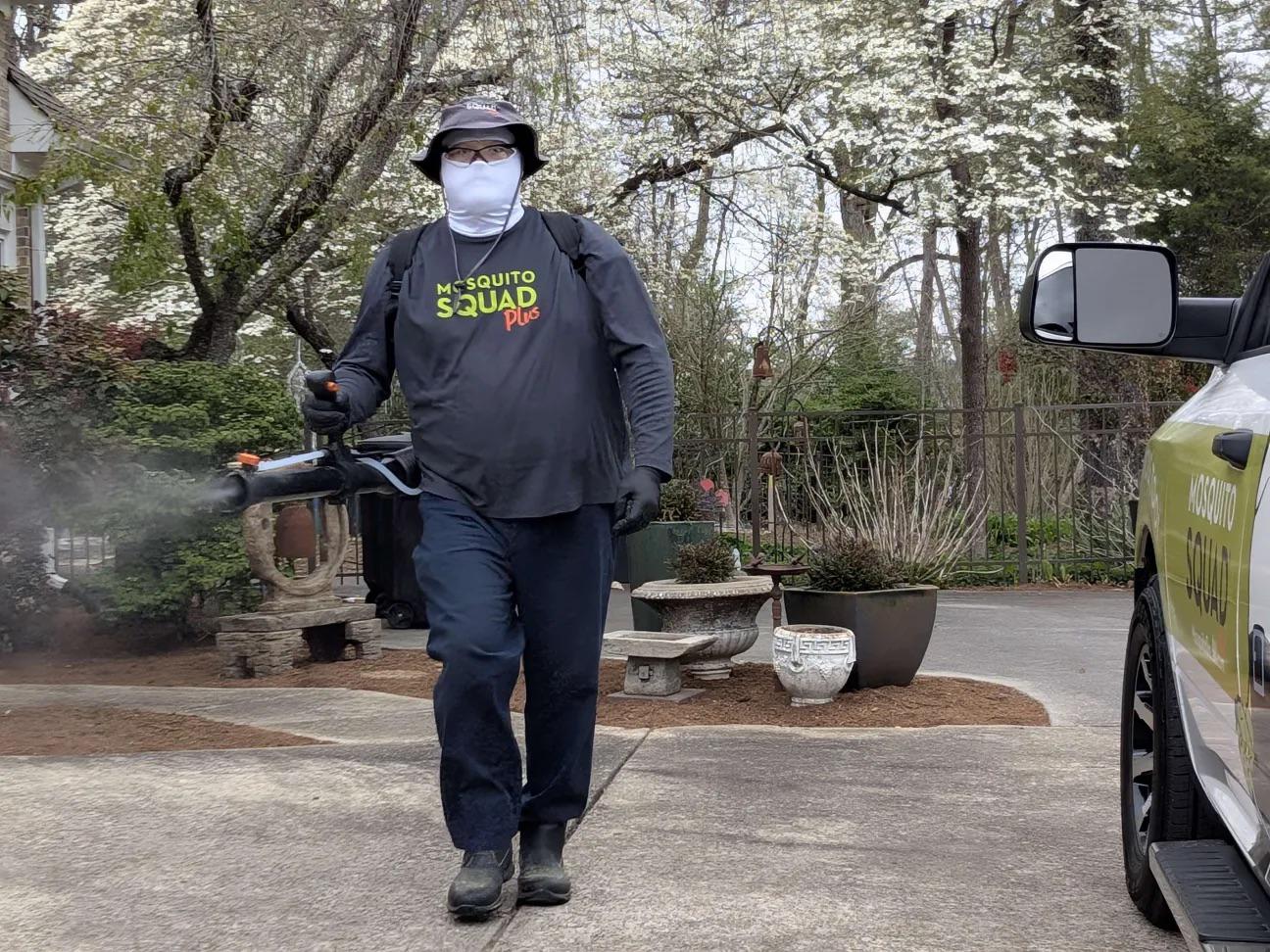
The neighborhoods running through Florence toward the Boone County line carry a particular character that takes a few seasons to fully appreciate. The lots in Oakbrook and the established subdivisions along the Burlington Pike corridor have genuine depth to them, mature hardwoods, landscaping that has had enough time to look like it was always there, yards where the outdoor season feels like it should be uncomplicated. It is the kind of place where being outside feels like it should be easy.
What most Florence homeowners do not know is that Boone County's tick situation has shifted considerably in the past several years. The rolling terrain that makes this part of northern Kentucky worth living in, the wooded lot edges, the creek corridors connecting residential neighborhoods to broader natural areas, that same terrain is precisely what blacklegged ticks require. And Kentucky is no longer the low-risk state for Lyme disease it was a decade ago.
It is early April. The nymphal blacklegged ticks that carry the highest transmission risk of the year are entering their active period right now in Boone County. By the time most families realize the season has started, it already has.
What Has Changed in Kentucky's Tick Risk Picture
This is not about an unusual year. It is about a permanent shift in where Lyme disease risk exists.
University of Kentucky researchers confirmed in early 2026 that blacklegged ticks are now established throughout the Commonwealth, with surveillance teams identifying established populations in at least 19 Kentucky counties as of 2024. In a recent field survey of 160 blacklegged ticks collected across the state, 40 tested positive for the bacteria that causes Lyme disease. That is a 25 percent infection rate. UK researchers attribute the expansion to ticks migrating from the Northeast and upper Midwest into Kentucky, finding ideal conditions in the state's vegetation and high humidity. One of the lead researchers described Lyme disease as a homegrown problem in Kentucky now, not something imported from elsewhere.
Kentucky's Department of Entomology at the University of Kentucky documents that blacklegged tick adults and nymphs are active from March through September, with adults remaining active whenever temperatures are above 40 degrees Fahrenheit. Boone County sits in the northern tier of the state, which means it reaches spring temperature thresholds earlier than most of Kentucky and sees the nymphal active period begin in earnest by early April most years.
The CDC documents that from April through July nymphs are actively questing for hosts, and that nymphal ticks pose particularly high risk because their poppy-seed size makes them nearly impossible to detect during the 36 to 48 hours needed for Lyme disease bacteria to transmit. A Florence family spending time near wooded lot edges in May is in the primary exposure window whether they realize it or not.
Why Boone County's Terrain Creates Specific Pressure Here
Florence sits on the rolling uplands of eastern Boone County at around 870 feet elevation. The terrain is gently rolling rather than dramatically steep, but that topography matters in ways that are easy to miss. The clay-rich soils documented throughout Boone County hold moisture longer than well-drained sandy soils, and the wooded lot edges and creek corridors that run through the established residential areas here stay humid and leaf-litter covered well into spring and fall.
Penn State Extension's tick habitat documentation is specific: blacklegged ticks are most abundant in densely wooded areas and at the edges of woods, and ornamental plantings and maintained lawns are far less attractive to them except where they abut woodland. The transition zone where a maintained Florence yard meets a wooded lot edge, a creek corridor, or an unmaintained natural border is where the population concentrates. That is true in April and it is true in September. The mowed open lawn in the center of the yard is not where the pressure lives.
Big Bone Lick State Historic Site adds a layer to this that is specific to Boone County and genuinely different from anything in the eastern Kenton County or Campbell County communities. The 813-acre park near Union features mixed hardwood forests, wetland corridors, and creek habitat that Kentucky State Parks documents as including wild brush along creek lines and densely wooded trail systems. That is continuous wildlife habitat. The white-tailed deer and small mammals that serve as primary tick hosts move between that parkland and the residential corridors that border it throughout northern Boone County. Florence properties that connect to that wildlife movement through drainage easements, green space buffers, or wooded lot lines face consistent tick reintroduction pressure throughout the active season that has nothing to do with how well the yard is maintained.
Research published in Environmental Entomology and reported by Entomology Today found that nymphal tick density was highest at the wooded side of the lawn-forest transition zone, where leaf litter and scattered undergrowth create the humid microclimate ticks require. The open mowed lawn was among the lowest-density areas on those same properties. That finding is directly applicable to a Florence yard with a wooded back fence line or a lot edge that borders the kind of natural corridor connecting back toward Big Bone Creek.
What Florence Homeowners Are Still Assuming
The problem is not carelessness. It is that Boone County's tick risk profile changed before most people had reason to update their assumptions about it.
A family that has lived in Florence for ten or fifteen years and never had a significant tick problem has a decade of experience that no longer accurately describes what is happening in their yard. The blacklegged tick population now established throughout Kentucky was not meaningfully present in Boone County residential neighborhoods at that level a decade ago. Most Florence homeowners are still operating on the old version of the situation without knowing the map has been redrawn.
So spring arrives and the yard looks fine. The first warm weekend pulls everyone outside. The kids are in the back corner near the fence. The dog is running the perimeter along the wooded edge. Nobody is thinking about ticks because the yard looks exactly the way it always has and nothing has happened yet.
Then something has.
Not during the exposure. During the bath that night, when a child goes quiet and points to something on their ankle. Or when the dog finally sits still long enough for you to find something small and dark at the base of its ear, already partially attached, the kind of thing that makes you put down whatever you were holding. The yard gets walked the next morning. Nothing obvious turns up near the patio or in the open lawn, which makes sense because that is not where the problem lives.
It is in the leaf litter at the base of the back fence line. It is in the shaded corner where Boone County's clay soil stays damp four days after the last rain. It is in the low brush where the property drops off toward the drainage easement. University of Rhode Island's TickEncounter resource center documents that blacklegged ticks are encountered predominantly in deciduous forest and in tall grasses and shrubs bordering forest edges. The open lawn between the patio and the fence is genuinely low-pressure terrain. Everything just past it is not.
So the granular product from the hardware store goes onto the open lawn because that is the part of the yard that feels manageable and visible. The tick check routine gets more serious. Both are reasonable responses to finding something on your child. Neither one addresses the population in the edge zones that produced it, and neither one changes what happens the following weekend when the kids are back outside and the dog is running the fence line again.
How the Right Treatment Approach Works in This Terrain
Effective tick control in a Florence yard follows the same logic it follows anywhere in Boone County with similar terrain. The treatment targets are the edge zones. The leaf litter accumulation along the back fence line, the shaded bed edges where humidity persists under canopy, the low brush at the property perimeter, and the transition zones between maintained lawn and natural or wooded area. Those are where the population concentrates, and where treatment intercepts it before it reaches the parts of the yard where families actually spend time.
Timing matters as much as location. The nymphal active period begins in early April in Boone County. A first treatment before the nymphal peak establishes a treated perimeter during the highest-risk window of the season. The same edge zones that concentrate spring nymphal pressure are the zones that concentrate adult ticks in fall. A program that begins in April and runs through October addresses the population at its source across the full active season rather than reacting to individual encounters after they happen.
The same terrain dynamic runs west through the county. Burlington sits along the Big Bone Creek drainage corridor and properties there with wooded lot edges bordering that creek system face the same reintroduction pressure Florence yards see from the northern Boone County wildlife movement. Big Bone Lick does not produce a tick problem only for the properties immediately adjacent to it. The deer and small mammals that use that corridor range across a much wider area of Boone County than most homeowners realize.
When to Start and What to Watch For
Early April is the right window for first treatment in most Boone County years. Not because ticks appear suddenly in April, they have been present in reduced numbers through the winter whenever temperatures allowed activity, but because the nymphal population that drives the highest human exposure risk activates with warming temperatures and builds toward peak density through May and June.
The specific indicators that tell you the season is already moving in a Florence yard: deer tracks in soft soil along the back fence after a wet morning in March or early April. The dog sitting unusually still while you find something small and dark at the base of its ear after an afternoon in the yard. A child coming inside from near the back fence line with a bite that develops slowly over several hours and concentrates near a sock line or waistband rather than on open skin. None of these are dramatic events. They are quiet signals that the edge zones are active and the season is several weeks in already.
Hebron and Erlanger homeowners with wooded lot edges and natural area borders see the same early spring activation pattern. The Kentucky tick risk picture that UK researchers documented in early 2026 applies across the full Boone County corridor and into the neighboring communities throughout this part of northern Kentucky.
For context on how the broader Northern Kentucky pest season builds across the region, the Taylor Mill blog covers what the Licking River does to mosquito season timing in Kenton County and the Fort Thomas blog explains why elevation does not protect Campbell County yards from seasonal pest pressure. The tick calendar in Florence operates on the same early-spring logic even though the terrain driving it is different.
Boone County's tick situation has changed. The edge zones in Florence's established neighborhoods are carrying more pressure than they were a decade ago, and the season starts earlier than most families realize. Reach out to Mosquito Squad Plus to get the perimeter addressed before the nymphal window peaks.