Mice vs Rats Comes Down to Ears, Tails and a Quarter Inch
Posted by Mosquito Squad® Plus
November 19, 2026
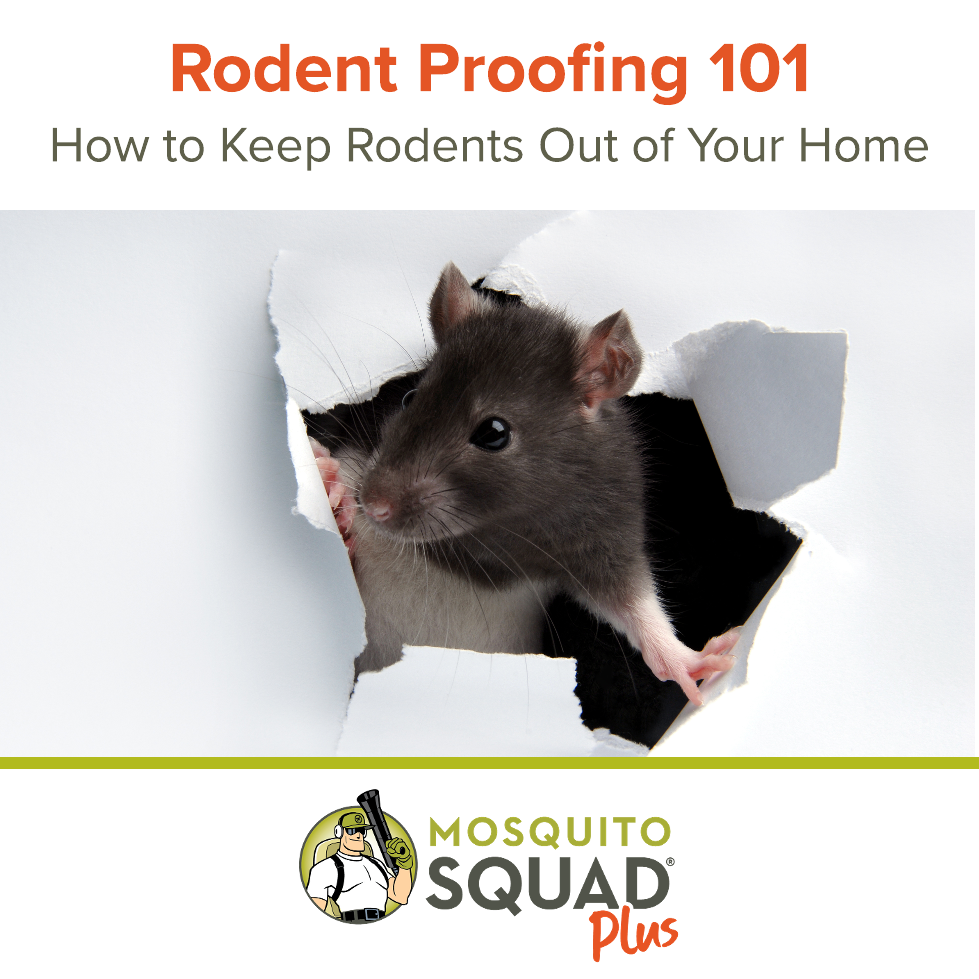
The quickest way to tell mice from rats is size. An adult house mouse weighs about half an ounce and measures 5 to 7 inches including its tail, with big ears and small feet. An adult roof rat weighs 5 to 10 ounces and a Norway rat 7 to 18, so even a lean rat is many times heavier.
Young rats are the tricky part. A very young rat has a big head and big feet for its body, while an adult mouse's are proportionately small.
Side by side
We at Mosquito Squad of North Orange County put this table together from the measurements in UC IPM's Pest Notes on the house mouse and on rats, with droppings from the Internet Center for Wildlife Damage Management.
|
House mouse |
Roof rat |
Norway rat |
|
|---|---|---|---|
|
Weight |
about 1/2 ounce |
5 to 10 ounces |
7 to 18 ounces |
|
Length |
5 to 7 inches with tail |
slender, tail longer than body |
stocky, shorter tail |
|
Ears and face |
large ears, small black eyes |
pointed muzzle, long ears |
blunt muzzle, short ears |
|
Droppings |
about 1/4 inch |
about 1/2 inch, pointed ends |
up to 3/4 inch, blunt ends |
|
Gnaw marks |
scratchy, about 1/12 inch |
larger, about 1/6 inch |
larger, about 1/6 inch |
|
Smallest gap |
1/4 inch tall, 3/8 inch wide |
1/2 inch under a door |
1/2 inch under a door |
The gnaw marks are a handy clue if you never see the animal. Rats leave tooth marks about twice the size of a mouse's.
How each one gets inside
Mice are the contortionists. UC IPM says a house mouse can squeeze under a gap 1/4 inch tall and through an opening 3/8 inch wide, climb any rough vertical surface and jump about a foot from the floor. Rats, especially young ones, can slip under a door with a half-inch gap and will gnaw a wooden door to widen it.
Both use the openings a house already has. UC IPM's exclusion list starts with the gaps around water pipes, electric wires, sewer pipes, drain spouts and vents, and it recommends sealing every hole larger than 1/4 inch, which keeps out both animals. Roof rats also climb, so openings above ground level need closing too.
Are mice as harmful as rats?
Both carry real health risks, and rats do more physical damage. UC IPM lists leptospirosis, salmonella and lymphocytic choriomeningitis (LCM) among the diseases house mice carry, and estimates that 5% of house mice in the United States carry and can transmit the LCM virus. Mouse urine is also a major allergen linked to asthma in sensitive children. Rats carry typhus, leptospirosis, food-borne illness and rat-bite fever.
Rats do more damage because of their size and habits. Mice nibble through food supplies and shred paper for nests. Rats gnaw wiring, wood and even soft metals, and UC IPM warns that rats in an attic can create electrical sparks and fires. Neither belongs in your home.
Where you're likely to find each one
Mice build nests from finely shredded paper or fibers in sheltered spots, such as the back of a drawer, a box in the garage or behind an appliance. Where mice live outdoors nearby, UC IPM says they often come inside in autumn as nights get colder, which lines up with this time of year.
Roof rats nest high, in attics and wall voids, and Norway rats stay low, in burrows along the foundation or on the ground floor. When both live in the same building, Norway rats take the lower floors and roof rats the upper ones. We wrote about telling one sighting from an ongoing problem if you're not sure how worried to be.
Why the answer changes the plan
Mice and rats need different tools, and getting it wrong wastes weeks. UC IPM notes that mice and small young rats often won't trigger a rat-sized snap trap. Roof rats need traps placed off the ground, on ledges, shelves, fences or pipes, while Norway rats are trapped along walls at ground level. The gaps you seal differ too, since a mouse needs only a quarter inch.
That's why it pays to know which one you have before choosing a fix. At Mosquito Squad of North Orange County, rodent control comes as an add-on to our Complete Home & Yard Package, quoted to your property, and our post on rodent control in Brea shows how it fits with year-round pest protection. Call (657) 217-2679 and tell us what you've seen. Gnaw marks, droppings or even a glimpse of a tail all help.