What the Firewood Pile and Fence Line Say About Termite Control in LaFayette, GA
Posted by Mosquito Squad Plus
June 29, 2026
You can tell a lot about a LaFayette property from its woodpile. Not the neat new rack by the porch, the old stack at the edge of the yard, the one that has been there a few seasons, settling into the dirt. That is the one we want to look at first. Around here, termites almost always show up in the yard before they ever reach the house, and the bottom of an old woodpile is where they sign their name. A split log crumbles like a stale cracker. A fence post you have leaned on for years wobbles loose, hollow as a drinking straw at the base. You are not even thinking about termites. You are just doing yard work on a Saturday, and the yard is quietly trying to tell you something.
So let us listen to it. On a LaFayette property, the colony almost always lives in the yard long before it moves into the house. The firewood pile, the old fence line, the stump you have been meaning to grind for three years, the railroad ties holding back the flower bed, the scrap lumber loitering behind the shed. Those are not warning signs that termites might show up someday. That is the colony's current mailing address. Your house is just the biggest, most expensive piece of wood on the lot, and they have not gotten to it yet because they are busy working through everything else first.
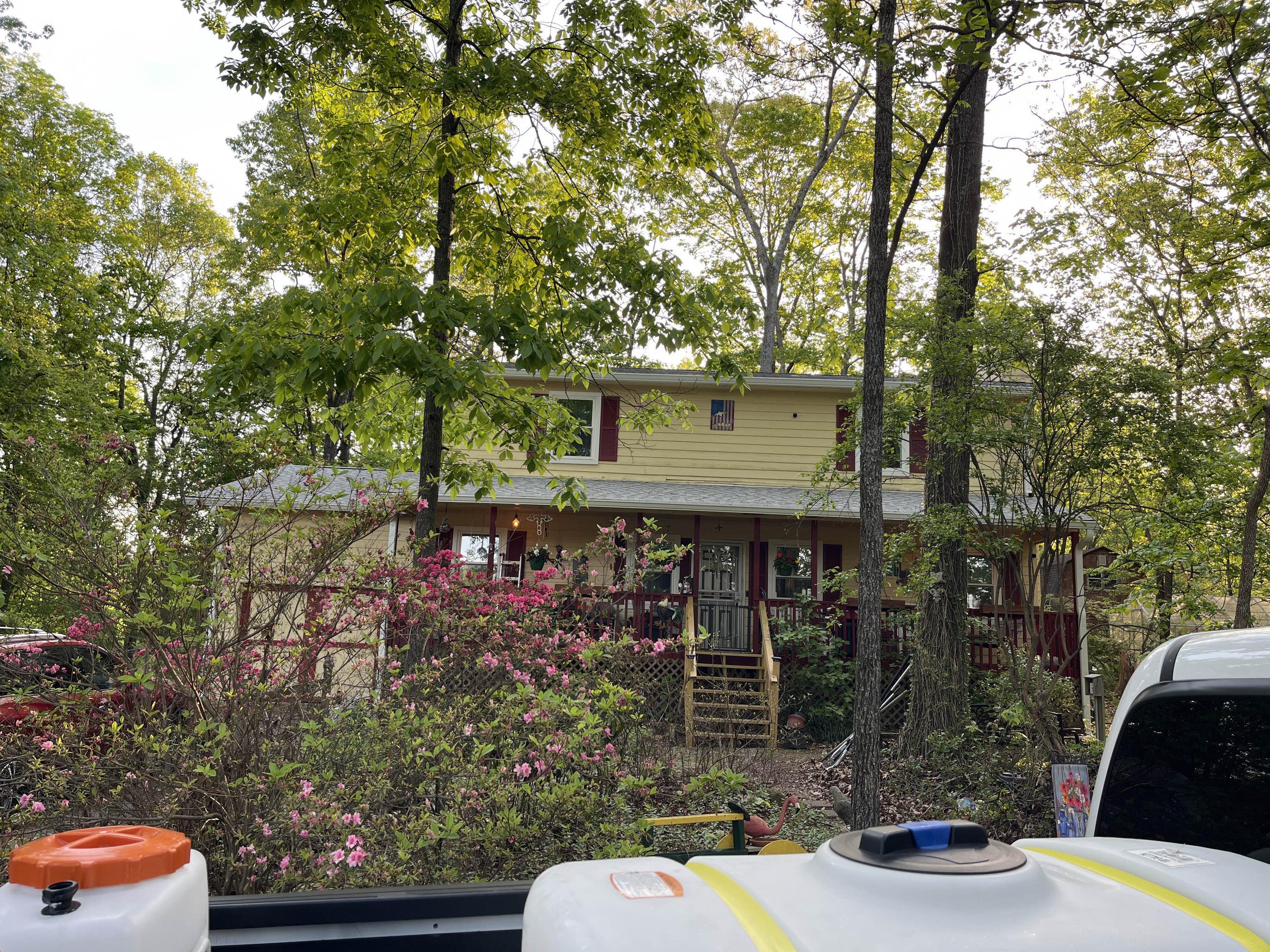
Termite control in LaFayette, GA on a real piece of land is a different animal than it is on a tidy quarter-acre lot in town. The lots are bigger. The wood touching dirt is everywhere. And the property line tends to disappear into the woods. Reading the yard is the entire job, and it is exactly the part most folks march right past on their way to anxiously inspecting the foundation.
Why a LaFayette Yard Feeds Termites Before the House Does
Start with the dirt under your boots. Georgia sits in the worst termite risk category the country hands out. The International Residential Code drops the whole state into Termite Infestation Probability Zone 1, labeled "very heavy," which is about as flattering as it sounds. Walker County is right there in it. The warm season runs long, the soil stays damp, and the native eastern subterranean termite that does nearly all the damage around here does not take a real winter off. It just keeps chewing.
LaFayette piles its own conditions on top. The land here rolls through the valleys and wooded hills of northwest Georgia toward the Chattooga River and the ridges, and the houses are not crammed together like sardines. They have tree lines, outbuildings, gardens, woodpiles, and the kind of slowly accumulating wood that comes with living on land instead of just parking a house on it. Wonderful for you, and unfortunately a five-star resort for termites.
Every one of those features is food, moisture, or both. Subterranean termites want two things: cellulose to eat and enough humidity that they do not dry out. The University of Georgia's biology of subterranean termites publication spells it out, these colonies live in the soil, not in the wood they eat, and they need a humid environment to survive. A rural LaFayette yard hands them both without anyone meaning to. The shade keeps things moist, the wood sits in the dirt, and the termites take it from there.
That is what makes pest control in LaFayette different from the in-town version. In a subdivision, the inspection is mostly the structure. On land, the structure is the last chapter of the book, and the story opens at the tree line. The same pattern shows up across our rural Georgia coverage, from Summerville down to Rome.
The Colony Is Farther From the House Than You Think
Here is the fact that flips how you should picture this whole thing. A termite colony is not crouched under your front porch, waiting to be discovered like a kid in hide-and-seek. It is out roaming.
The University of Georgia documents that subterranean termites can travel up to 100 yards from the central colony hunting for wood, and the USDA Forest Service's research on subterranean termite foraging clocks workers ranging well over a hundred feet from the nest through a web of tunnels. Translation: a colony nesting back at your tree line, or on the neighbor's wooded acreage, can absolutely be working the firewood against your house and the sill plate above it on the same tunnels. Those termites commute. They are very dedicated.
That distance is the whole reason the yard matters. A colony is not a dot on a map, it is a web. The nest might be twenty feet down near the woods, with foraging tubes branching out like a subway system that only runs to lunch. The firewood pile is one stop, the fence line another, the stump another. Your house is the grand central station they are slowly tunneling toward.
Termite control in LaFayette that only checks the foundation is reading the last page first and wondering why nothing makes sense. By the time the colony reaches the structure, it has been throwing a years-long party in your yard on all the wood you can see. Catching that early is the difference between a manageable treatment and a deeply unpleasant repair bill.
Our Chattanooga termite breakdown covers how the age of a house shapes risk in town, and the Cleveland older-homes guide handles established in-town foundations. A rural LaFayette property is the third character in that story: the yard, not the foundation, is where the trouble starts.
What the Firewood Pile Is Actually Doing
Just about every rural property in this corner of Georgia has a woodpile. It is the single most reliable termite magnet we find on LaFayette land, and it is also the one people get wrong without a second thought.
A firewood stack on bare ground against the house is, no exaggeration, about the worst thing you can do short of mailing the termites an invitation. It dumps a mountain of cellulose into soil contact, traps moisture underneath where the sun never reaches, and bridges dirt to structure so the colony gets a covered walkway straight to your siding. The logs kissing the dirt at the bottom are where it kicks off. By the time you are pulling pieces off the top in January, the bottom layer has often been a termite cafeteria for a full season.
The fix is almost insultingly simple and worth doing whether or not you ever call us. Firewood goes off the ground, up on a rack or a row of blocks, and away from the house, ideally twenty feet out and elevated, so the pile stops being a damp little bridge. That will not evict a colony that has already moved in, but it pulls the welcome mat and cuts off the covered route to your walls.
What the woodpile really is, though, is a free report. A stack showing termite activity down at the bottom is flat-out telling you the colony is on your property and foraging right now. It is the cheapest inspection on the whole place, and it does not even charge you. If the bottom of your pile is producing mud and pieces that flake apart, congratulations, the conversation just stopped being hypothetical.
The Fence Line, the Stumps, and the Railroad Ties
After the woodpile, the fence is next. Old wooden posts jammed straight into the soil are textbook termite real estate: cellulose, permanent dirt contact, and a below-grade section that stays humid year-round. Posts standing fifteen or twenty years are often hollowed at the base while looking perfectly upright and dignified above ground. Give one a push or a knock. If it wobbles or sounds hollow, something has been quietly eating it from the bottom up.
Stumps are the same story, supersized. A tree that came down in a storm or got cleared for a garden, sawed off at grade and left to rot, is a buried buffet that feeds a colony for years. The University of Georgia's Center for Urban Agriculture notes that an average colony cruises along near 50,000 termites until it hits a big food source like a stump or a fat log, then balloons into the hundreds of thousands. That quiet stump in the back corner is not a lawn ornament. It may be the all-you-can-eat buffet bankrolling the colony that finds your house.
Then there are the railroad ties, and this one comes with a LaFayette-specific wrinkle. Reclaimed crossties are everywhere in rural northwest Georgia landscaping, holding back flower beds, lining driveways, building raised gardens and retaining walls. Most of the time they are just more wood in soil contact, which is reason enough to keep an eye on them. But the University of Georgia's Formosan termite guidance points out that the Formosan, a meaner and hungrier cousin of our natives, gets spread most often through exactly this habit, infested crossties hauled into the landscape. Now, UGA is also clear that the Formosan is still rare in Georgia and that having crossties in no way means you have them, so do not go losing sleep over your flower bed border. It is simply one more reason the landscape wood on a rural property earns a real look instead of a passing glance.
The thread tying all of it together is wood touching dirt. The Georgia Department of Agriculture regulates structural pest control work precisely because reading these conditions correctly takes actual training. Deck posts buried below grade, porch supports planted in soil, lattice and skirting sitting in the dirt, scrap lumber stacked behind the shed, mulch heaped up against the foundation like a cozy blanket. On a property with land, these stack up fast, and they are the stepping stones that walk the colony from the woods to your walls. They also tend to bring the whole gang, with ant, fire ant, cockroach, and rodent activity all happily clustering in the same damp, cluttered corners.
What Homeowners Try First, and Why It Does Not Hold on Land
The first move after spotting termite signs is almost always a hardware store product aimed at the spot you can see. A can of foam fired into the mud tube. Granules flung around the fence posts. A bait stake thumbed into the ground near the deck. Every one feels deeply satisfying, and on real acreage every one runs face-first into the same wall: the colony is not where the visible activity is. It is out in the soil, maybe 100 yards off, with routes you cannot see. Killing the workers in one mud tube is like swatting a single ant at a picnic. The Tennessee Department of Agriculture and extension consumer guidance make the same point about DIY termite products, they treat the symptom you can see and leave the colony you cannot completely unbothered.
Bait stations are not useless, but as a solo act on a big rural lot they have a catch: a station only works if foraging termites actually wander into it. With a hundred competing food sources already buried around the property, a few lonely stakes near the house are easy to walk right past. The firewood, stumps, and fence posts are bigger, older, more established draws than a fresh bait stake, and termites are creatures of habit. They stay on the routes they know.
The approach that actually holds on land is a continuous treated zone in the soil around the structure, paired with cleaning up the yard food and moisture that invited the colony over in the first place. Liquid termiticide lays down a treated band the foragers have to cross to reach the house, and it is rated to last years. But that is only half the job on a rural lot. If the woodpile is still bridging to the siding and the stumps are still catering the colony, the property keeps generating pressure. The treatment guards the house. The yard cleanup takes away the reason the termites were headed there to begin with.
What Termite Control on a LaFayette Property Actually Looks Like
The inspection comes first, and on land it is decidedly not a quick lap around the foundation. A real termite inspection reads the structure and the yard as one system: foundation perimeter, crawl space, plumbing penetrations, and sill plate, then everything out in the yard the colony might be dining on, the woodpile, fence line, stumps, outbuildings, deck and porch supports, landscape timbers, and the moisture sitting across the property.
What the inspection turns up decides the treatment. A property with active mud tubes climbing the woodpile and a wooded edge fifty feet off the back porch is a very different job than one with no visible yard activity and a single damp crawl space. The University of Georgia's urban agriculture research on entry points found that most structural infestations sneak in through foundation expansion joints and cracks, with a smaller slice coming through direct wood-to-soil contact, which is exactly why you read the house and the yard together. The door they walk through is on the structure. The dinner that lured them across the yard is usually out back.
Treatment generally means a soil termiticide application laying down a continuous treated zone around the structure, plus straight talk about the yard conditions feeding the pressure. The firewood comes off the ground and away from the house. The stumps get flagged for grinding or monitoring. The soggy drainage gets sorted out. None of that is optional when the yard is doing half the work of recruiting the colony.
The other half never really ends. A single treatment lays down a barrier, but it does not vaporize the colony beyond it, and on a wooded rural lot there is pretty much always a colony beyond it. Annual monitoring confirms the treated zone is intact and catches fresh activity before it graduates into a structural headache. Our Home Shield program keeps the structure perimeter under year-round protection, which on a property ringed by woods is less a luxury upgrade and more a baseline. For working properties with barns, shops, or rental units, our commercial services cover the same ground at building scale.
The math, thankfully, is simple. Termite damage is not covered by standard homeowners insurance, and the University of Georgia documents that Georgia residents shell out between $200 and $300 million a year on termite control and repair. A free inspection and an active program cost a sliver of one serious structural repair. On a property carrying this much wood in this much soil contact, the real question is not whether the colony will find the house, it is whether anybody catches it first.
So if you are in LaFayette or anywhere across Walker County and something is off in the woodpile, a fence post no longer sounds solid, or swarmers are peeling off the deck in spring, that is your cue to walk the yard with someone who knows what those clues mean. Call us at (423) 403-3513 or request a free inspection and we will read the whole property, not just the foundation.