Carpenter Ants and Carpenter Bees Are Destroying Cape Cod Homes — Here's How to Stop Them
Posted by Mosquito Squad Plus
June 8, 2026
Serving Brewster, Chatham, and Dennis homeowners with professional pest control solutions.
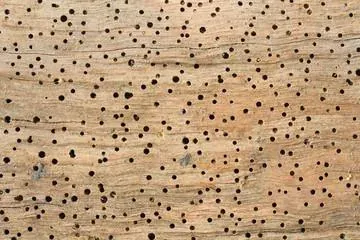
If you have noticed sawdust-like debris, perfectly round holes in wood, or more insect activity around your siding, deck, or trim, carpenter ants and carpenter bees may already be active around your home in Brewster, Chatham, or Dennis.
Many Cape Cod homeowners first assume they are seeing ordinary ants or non-destructive bees, but these wood-damaging pests can quietly weaken structures over time if they are not addressed quickly.
This guide explains how carpenter ants and carpenter bees behave, why Cape Cod homes are vulnerable, and when it is time to call for professional help.
Round bore holes in wood are a telltale sign of carpenter bee or wood-boring insect activity.
Why Carpenter Ants and Carpenter Bees Love Cape Cod Homes
Cape Cod homes often have the exact conditions these pests want, including exposed wood, coastal moisture, shaded trim, and aging exterior features that stay damp after rain.
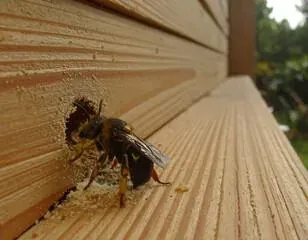
Carpenter ants are drawn to softened or moisture-damaged wood for nesting, while carpenter bees bore into bare or weathered wood to create galleries for reproduction.
Decks, railings, fascia boards, porches, and outbuildings are all common targets, especially when they are not regularly sealed or painted.
Moisture and weathering make a difference
The combination of salty air, wind, and changing temperatures on Cape Cod can wear down exterior wood, making it more attractive to carpenter ants and carpenter bees.
Even homes that look well maintained from a distance can have hidden pockets of softened wood that these pests exploit.
Signs You May Have a Carpenter Ant Problem
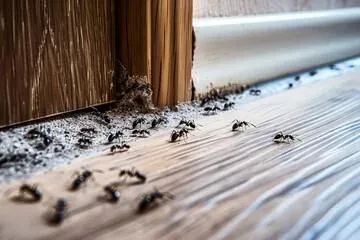
Carpenter ants do not eat wood like termites, but they tunnel through it and can expand hidden galleries over time. Common warning signs include rustling sounds in walls, piles of sawdust-like frass, winged swarmers, and ant activity around windows, kitchens, and damp wood areas.
If activity increases at night or near sinks, crawl spaces, and decks, the colony may be larger than it appears, and nests may be split between inside and outside the home.
Because carpenter ants are often larger than other ant species, seeing big black ants indoors or along exterior foundations can be a red flag for Cape Cod homeowners.
Signs Carpenter Bees Are Damaging Your Property
Carpenter bees usually leave smooth, round entry holes in wood surfaces such as railings, fascia boards, eaves, and fences. You may also notice yellowish staining beneath the holes from droppings or pollen.
In some cases, increased woodpecker activity is another clue, because birds may be looking for carpenter bee larvae hidden inside wood.
Even when damage starts small, repeat nesting season after season can weaken decorative and structural wood elements and lead to more expensive repairs.
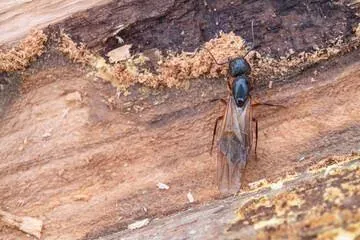
Winged carpenter ant swarmers on wood signal a mature, established colony. Don't ignore them.
Areas of Brewster, Chatham, and Dennis Homes at Highest Risk
Ocean-facing sides of homes, shaded decks, older sheds, and trim near rooflines all tend to hold moisture and show weathering sooner, making them common targets for carpenter pests.
Homes with extensive wood features, such as wraparound decks or multiple exterior stairways, naturally offer more potential entry points and nesting sites.
How to Prevent Carpenter Ants and Carpenter Bees
Repair moisture issues, replace rotted wood, seal cracks, and keep exterior wood painted or treated whenever possible. Reducing excess moisture is especially important because damp wood attracts carpenter ants and also makes wood more vulnerable to bee damage.
Routine inspections around decks, trim, porches, sheds, and rooflines can help catch problems before they become more expensive to repair.
Keeping shrubs and vegetation trimmed back from wood surfaces also improves airflow and drying, which reduces moisture problems.
Homeowner tip: Walk around your Brewster, Chatham, or Dennis home a few times a year looking specifically for wood damage, small holes, staining, or frass piles. Addressing these early can save significant money later. If you discover suspicious activity, avoid sealing holes or using store-bought products before speaking with a professional — the full extent of the issue needs to be evaluated first.
Why Professional Control Makes a Difference
These pests are difficult to fully control with store-bought products because the real problem is often hidden inside wood voids, wall spaces, and nesting galleries.
Professional service can identify the source, treat active areas, and help protect the vulnerable parts of your home from future damage.
Technicians familiar with Cape Cod construction styles and local conditions can spot patterns that an untrained eye might miss, such as subtle wood damage or moisture issues near the foundation.
Learn more about ant control options
If you want to understand more about how professional ant control works and the different strategies available, you can review Mosquito Squad's ant control resource at mosquitosquad.com/bugs-pests/ant-control/.
Local Information for Brewster, Chatham & Dennis Homeowners
Protect Your Home Before Damage Gets Worse
Carpenter ants and carpenter bees can quietly damage exterior and interior wood long before homeowners realize the extent of the problem. Over time, that damage can affect decks, railings, and even structural elements. If you are seeing signs in Brewster, Chatham, or Dennis, call us today to schedule an inspection.
Call (508) 461-2010 for a free quote, or request a quote online.