Argentine Ants Arrived in California in 1907 and Never Left
Posted by Mosquito Squad® Plus
November 23, 2026
Argentine ants are small, dull brown ants, about 1/8 inch long, native to northern Argentina and now the most common ant in and around California homes. They don't sting or bite people, but their nests link into huge supercolonies with many queens, which is why spraying the trail you can see rarely ends the problem.
If you've wiped a line of them off the counter only to find a new one the next morning, you've met the supercolony.
Why Argentine ants rule Orange County yards
They've had a long head start. The University of California, Riverside's Center for Invasive Species Research says the Argentine ant was first recorded in California in 1907 and is now widespread in the coastal and southern parts of the state. It thrives where winters are mild and humidity is moderate to high, which describes much of North Orange County.
The secret is cooperation. Most ant colonies fight their neighbors, but Argentine ants show unusually low aggression toward each other, so their nests join up instead. UC IPM's Pest Notes on ants describes colonies that "aren't separate but linked to form one large supercolony with multiple queens." When a new queen leaves to start a nest, workers go with her.
What brings them indoors
Food and water. UCR says Argentine ants enter homes through cracks and other openings "in search of food or water," and that they live at high densities around yard features that hold moisture, such as potted plants and the bricks or stones of a walkway. Irrigated yards suit them well.
Indoors, UC IPM notes, household ants go after sugar, syrup, honey, fruit juice, fats and meat, and a trail can run to thousands of ants between the nest and a single crumb. Look under sinks, along pipes and around the edges of the kitchen to see where they're coming in.
Why are Argentine ants a problem?
Beyond the kitchen, they protect garden pests. Argentine ants farm aphids, scales and mealybugs for their sugary honeydew and drive off the insects that would otherwise eat them. UCR reports that parasitism of California red scale, an important citrus pest, dropped two- to five-fold when Argentine ants were present. If your citrus or roses keep getting sticky, the ants may be part of the reason.
UCR adds that they disrupt native ants, pollinators and even some vertebrates.
Why the colony matters more than the trail
The trail on your counter is only the delivery route. The nests and queens sending those workers are somewhere else, and with Argentine ants they're spread across many linked nests. UCR notes that a substantial portion of an Argentine ant colony lives below ground, beyond the reach of a surface spray, and UC IPM says spraying ants indoors "will not prevent more ants from entering." Wipe out one trail and the colony simply sends another, which is why at Mosquito Squad of North Orange County we talk about colonies rather than trails.
Control has to reach the colony itself. UC IPM explains that worker ants pass food mouth to mouth to other workers, larvae and queens, which is how a slow-acting product carried back to the nest can affect the whole colony. Indoors, UC IPM suggests wiping trails with soapy water so other ants can't follow the scent. UCR's list for homes and yards adds cleaning up food scraps, closing entry points, and removing landscaping features that hold extra water. Our FAQ on whether you can get rid of ants for good is honest about the limits, and UC IPM agrees that eliminating ants entirely from an outdoor area isn't realistic.
Sugar ants is a nickname, not a species
"Sugar ant" is what people tend to call whatever small ant goes after the sweets. In California the ant most likely to be doing that is the Argentine ant, since UC IPM names it the most common ant in and around homes and lists sweets as its main food. So if you've been calling them sugar ants, you're probably describing Argentine ants.
Where our home and yard plan fits
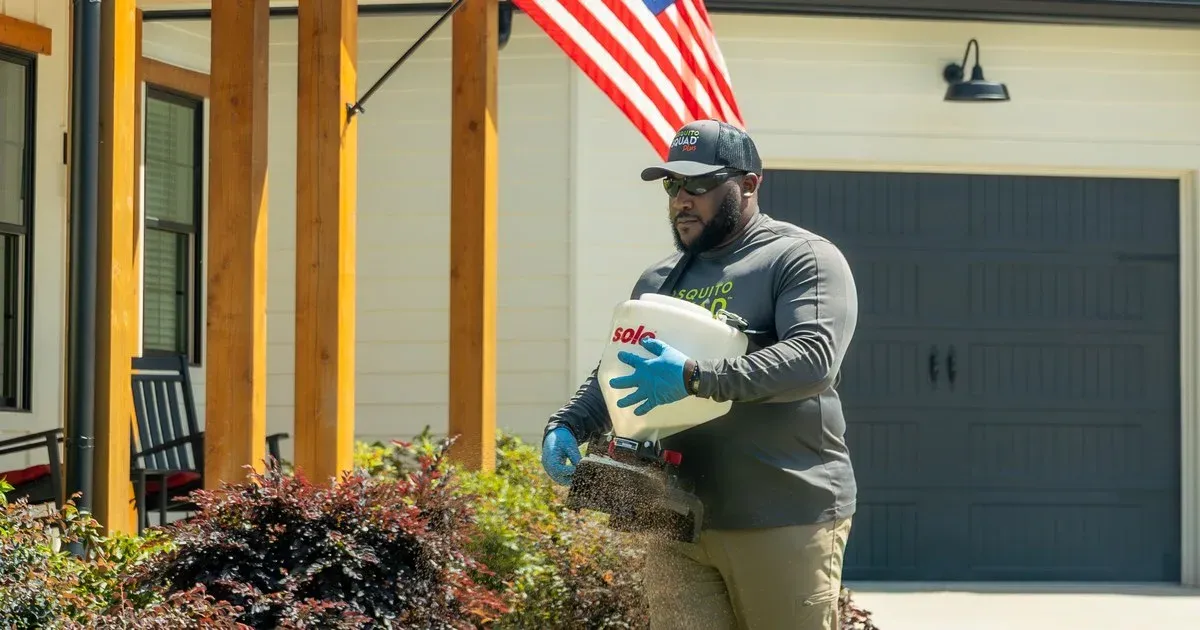
Living with Argentine ants in Orange County is a year-round job, and our climate keeps pests busy in every season, as we explain in how our climate drives pests. Our home & yard pest control plan, the Complete Home & Yard Package, treats the ant colonies outside your home and the entry points they use, and recurring service helps protect your kitchen year-round. It starts at $106 per treatment, and we quote each property individually.
We also offer ant control in Fountain Valley for homes closer to the coast, and across the rest of our service area. Call Mosquito Squad of North Orange County at (657) 217-2679 for a free quote.