Hornet Removal in Birmingham: Look Down Before You Look Up
Posted by Mosquito Squad Plus
July 14, 2026
Somebody in Hoover is going to spend part of this week mowing the back stretch, take four stings to the ankle from insects he never saw coming, and limp inside to type hornet removal into a phone with grass still stuck to it. Fair enough. Whatever hit him was fast, organized, and mean. It also never touched a tree. Around Greater Birmingham, the colony most likely to put somebody in urgent care lives under the grass, the gray paper ball people picture when they say hornet is the rarest of this metro's stinging problems, and the smart way to survey a yard here runs from the ground up. That is how the walkthrough below goes, one layer at a time, starting at your feet.
Below the Grass: Where Birmingham's Real Sting Risk Lives
The eastern yellowjacket owns the ground floor of this market. It nests in the dirt, favoring abandoned rodent burrows, loose soil around tree roots, embankments, and the gap under a landscape timber, and per the Alabama Cooperative Extension System, the entrance to the whole operation is typically the size of a nickel. That nickel is the entire visible footprint of a colony running into the thousands by late summer, and it explains the signature Birmingham sting story: nobody saw anything until the mower crossed the wrong spot.
The mower is the trigger because vibration is the alarm. A ground colony reads the rumble of equipment overhead as an attack on the nest itself, and the response comes up out of the hole in seconds, aimed at whatever is closest and warmest. Alabama Extension entomologists have credited yellowjackets with nearly all stinging insect deaths in the United States, a distinction earned through exactly this scenario, repeated across yards every summer. Each one stings repeatedly, they arrive in numbers, and the person on the mower has no idea where the attack is even coming from, because the source is a hole behind them in the grass.
The defense is a habit that costs five minutes. Before the first mow of any stretch that has sat for a while, walk it. You are looking for a steady stream of yellow and black traffic rising from and dropping into one point in the ground, strongest in the warm morning hours. Around the wooded lot edges of Trussville and the newer large lots in Chelsea, that walk pays for itself yearly, and it matters most in fall, when ACES pegs peak yellowjacket season and the colonies are at maximum size with minimum patience.
The metro's terrain feeds the habit. Birmingham yards are full of slopes, retaining walls, railroad-tie beds, and cut banks, the leftovers of building a city across ridges, and every one of those features offers a ground colony a dry, protected, south-facing bank to dig into. The embankment behind a Pelham walkout basement and the terraced beds of a Hoover backyard are the kinds of features we check first, because a bank entrance survives rain that would flood a flat-lawn burrow, and the colonies in them tend to run bigger for it.
Ground level is also where Birmingham's other famous colony lives. Fire ant mounds and yellowjacket entrances share the very same lawns from Alabaster to Pinson, and while the two pests are unrelated, the homeowner posture is identical: check the ground before you work it. The mound with no visible hole belongs to the ants and our fire ant control page covers that fight. The clean hole with flying traffic belongs to the yellowjackets, and it is the more urgent of the two discoveries.
The Alabama Complication: Winter Does Not Always Reset the Board
In most of the country, every yellowjacket colony dies with the cold, and each spring starts from zero. Alabama is the state where that guarantee comes with fine print. In mild winters, some colonies keep their queens and simply continue, and the continuation produces the perennial giants this state is known for, colonies documented by Science magazine at up to 15,000 insects, with Extension officials counting ninety across Alabama in a single season. They turn up attached to protected structures and undisturbed corners, and Jefferson and Shelby counties sit squarely inside the phenomenon's home range.
For a Birmingham homeowner the practical meaning is modest but real. A ground colony that was active in October and quiet in December is probably dead, and probably is doing some work in that sentence. If flying traffic reappears at the same hole on the first warm week of late winter, the colony did not die, it wintered, and it is starting the new season with a head start no spring colony can match. That is a call-now situation, because everything about a perennial colony, size, defensiveness, and difficulty, runs a full season ahead of the calendar.
Knee to Eave: The Red Wasp Layer
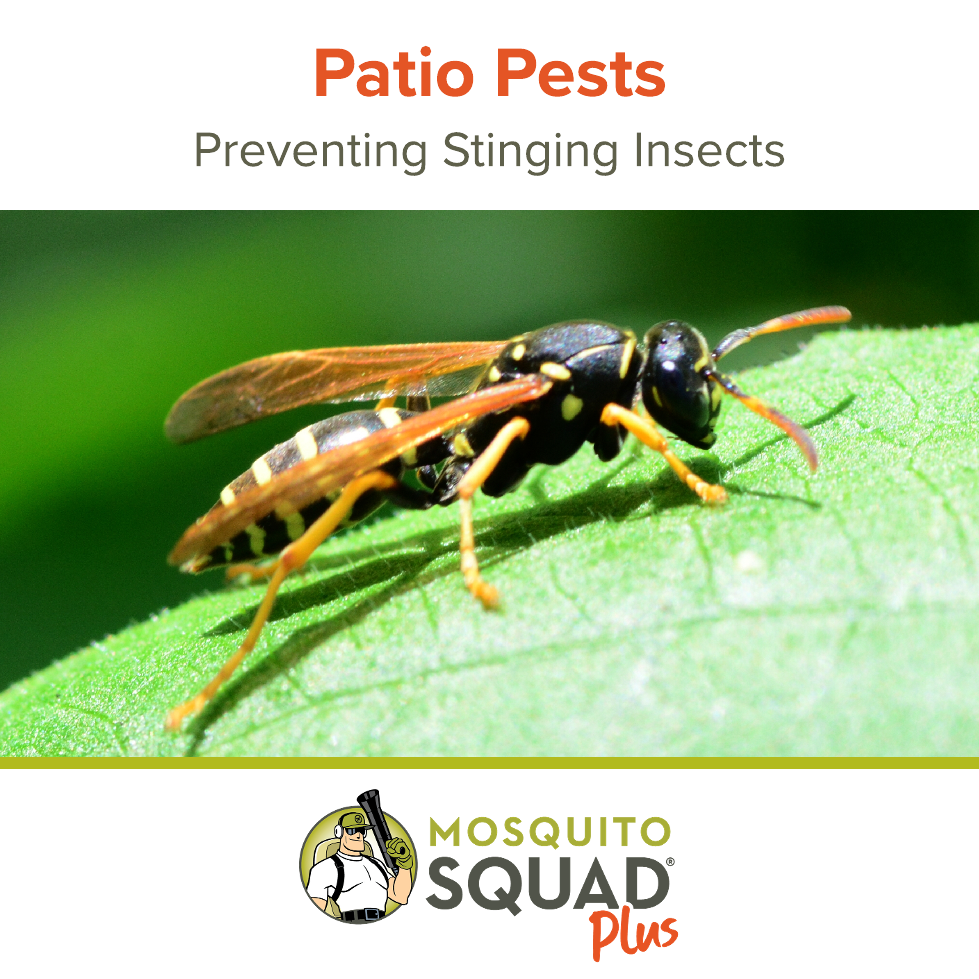
The middle altitude of a Birmingham yard belongs to paper wasps, and in this part of the South that mostly means the red wasp, the rust-colored one building open honeycomb umbrellas under porch ceilings, behind shutters, inside the mailbox, under the grill lid, and along the fence rail. The University of Georgia's stinging pest circular covers the family across our region, and the fair summary is that paper wasps are the least aggressive insects in the whole stinging lineup occupying the most human real estate in the yard, a combination that produces steady low-grade conflict all season long. They rarely start trouble. The trouble is that their nests sit exactly where hands, doors, and heads go, which means the least aggressive wasp in the yard still accounts for a healthy share of the summer's stings purely on positioning.
The old housing stock across Homewood and Irondale offers red wasps a century of porch ceilings, soffit returns, and window framing, and the ridge neighborhoods of Vestavia Hills add deck undersides hanging over wooded slopes, the same terrain that drives the tick pressure we covered in our Vestavia tick post. A small, fresh umbrella with a handful of wasps in early spring is a manageable problem. The same nest in August holds a full crew over your back door, and the location, more than the species, is what turns it into a removal call.
Overhead: The Hornet People Picture
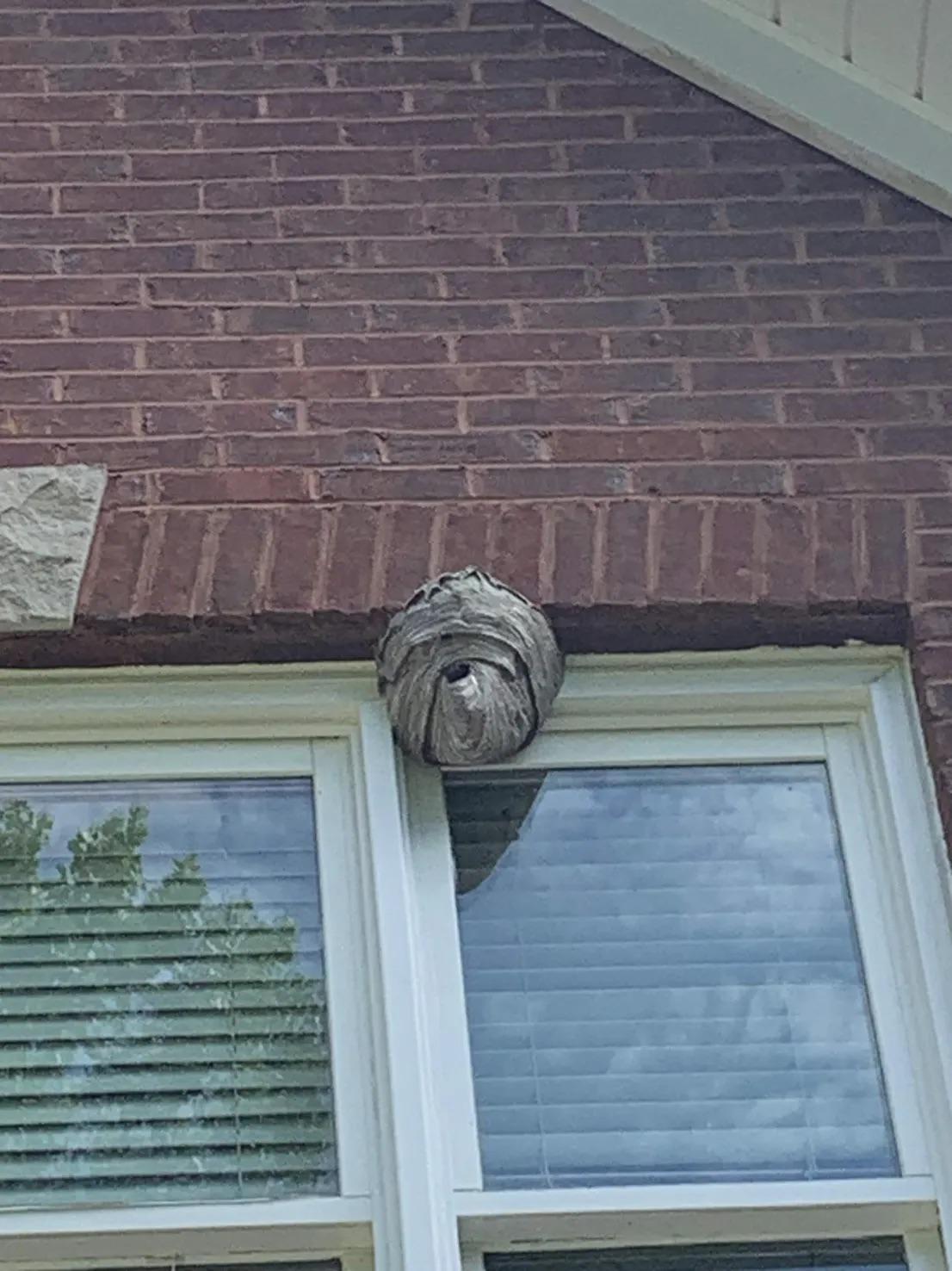
The bald-faced hornet does live here, and it is the one insect in the metro that matches the mental image the word hornet carries. Black with a white face, it builds the large enclosed paper structure in trees, dense shrubs, and occasionally on a gable, and the University of Kentucky's entomology program ranks it among the most hazardous stinging insects to approach. The colony defends as a unit, each member stings repeatedly, and the vibration of a thrown object or a pole saw against the branch is a declaration of war it will accept.
What the overhead nest has going for it, from a homeowner's standpoint, is honesty. It hangs where a deliberate look will find it, it grows in one place all season, and it announces itself the way the ground colony never does. The wooded creek corridors around Helena and Indian Springs and the mountain shoulders on either side of the metro, terrain we mapped in our Red Mountain divide post, hold most of the aerial pressure.
The old-canopy neighborhoods over the mountain carry their share too, since the mature oaks shading a Mountain Brook street offer the anchored branch structure an aerial colony wants, with the nest often screened by the same leaves that make the street worth photographing. A slow scan of the tree line and eaves once a month through summer finds these nests while they are still modest, and modest is the only good time to find one, since the same nest revisited in September will have spent the interval hiring.
The Range Edge: Where the True Hornet Gets Scarce
Greater Birmingham sits near the thin end of the European hornet's map. Alabama Extension places the state at the southern boundary of the species' range, with populations scattered rather than standard, so the giant reddish hornet that dominates barn and wall-void work in the northern half of the state is an occasional guest here rather than a resident headliner. They do turn up, usually announced by their one unmistakable habit, flying at night and bumping lit windows, and the wooded eastern reaches toward Moody and Pell City produce more of them than the metro core.
The takeaway runs opposite to the northern markets. If something enormous is at your porch light after dark in Jefferson or Shelby County, a European hornet is possible and worth confirming with a photo. But the base rates say the large insect in your Birmingham yard is far more likely a cicada killer, a harmless solitary digger, or a bald-faced hornet with a nest nearby, and the colony that deserves your caution budget this week is the one at your feet, not the rare giant at your window. The keyword gets searched constantly around here, and the insect it names is the one this metro barely has.
What Goes Wrong When Homeowners Fight the Ground
The spray can fails against ground colonies in its own special way. The aerosol reaches the first few inches of a tunnel system that runs deep and branches, the queen sits far past the wet zone, and ACES states without hedging that the cans do little or nothing against a full colony. Meanwhile the application itself, standing over the entrance at close range, is the highest-risk position in the entire yard. Some homeowners escalate to the old gasoline trick, which fails the same way while poisoning the soil, killing the grass in a ring, and creating a hazard worse than the wasps.
The EPA's stinging pest guidance puts established colonies in professional hands with proper equipment, and the ground nest is the strongest case for that rule anywhere in the yard, because there is no seeing what you are up against. A hanging nest shows you its size. A hole in the dirt shows you a hole in the dirt, and the colony behind it might be four hundred insects or a perennial monster. The CDC's stinging insect page carries the medical reason the uncertainty matters: dangerous venom reactions strike people whose history gave no warning, and a mass stinging event delivers the whole load at once. Betting on the small end of the range while standing over the entrance is a bet with bad odds and worse stakes.
What Hornet Removal in Birmingham Involves
Our inspections here run ground first for the same reason the walkthrough above does. We walk the turf and the beds before anything else, flag entrance holes and fire ant mounds, then move up through the shrub layer, the porch ceilings and shutters, the deck undersides, and finish at the tree line and roofline. On the wooded-edge lots that dominate this metro's suburbs, that sweep regularly turns up two or three separate stinging insect situations at different altitudes on one property, and knowing all of them before treatment starts is what keeps the second problem from becoming next month's call.
Treatment matches the layer. Ground colonies are treated at the entrance with products and timing that reach the chamber, not just the tunnel mouth, and the entrance is left alone until the colony below is finished. Paper wasp work at the eaves is quick and unglamorous. Aerial nests come down only after the colony inside is gone. Cavity work, on the occasions this market produces it, follows the same rule every market does: treat the void first, close the opening last. And each job ends with a barrier application, since a lawn that raised one ground colony has the drainage, the cover, and the food to raise the next one.
The season-long answer is layered the same way the problem is. Our Home Shield package works the structure where the wasps meet the house, Squad Yard Defender covers the turf and edges where the ground colonies start, and the pest packages menu combines them to fit the property. One tool clarification, stated every time: automatic misting systems run scheduled mosquito defense and do it well, and no mist reaches a chamber two feet under the lawn, so colony work is always targeted work. The rest of how we operate lives on the why Mosquito Squad Plus page, our guarantee backs every job, and the whole footprint, Hoover and Mountain Brook through Bessemer and out to the lake country, is on our areas we service page.