Commercial Pest Control in Birmingham: What Medical Offices and Older Buildings Actually Need
Posted by Mosquito Squad Plus
June 29, 2026
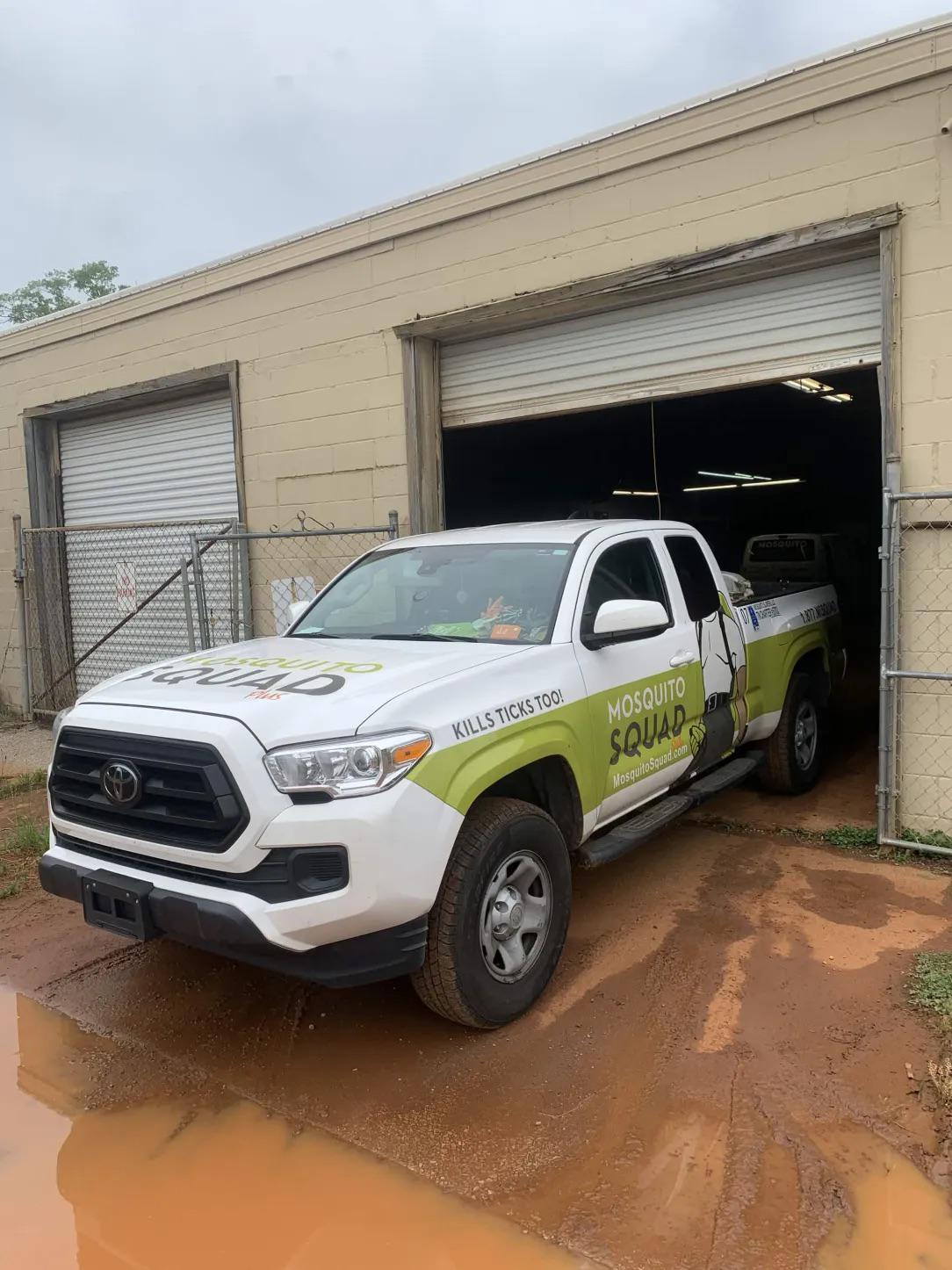
A roach walking across the floor of a waiting room is not the same event as a roach walking across your kitchen at home. At home it is gross. In a dental office with six patients in the chairs and four more in the lobby, it is a small public relations crisis happening in real time, and everyone in that room is watching it happen. The bug is identical. The stakes could not be more different, and that gap is most of what makes commercial pest control in Birmingham its own particular animal.
Birmingham is a medical city wearing the clothes of an old industrial one. UAB is the largest employer in the entire state, the medical district pulls in close to two million patient visits a year, and the streets around it are lined with clinics, dental practices, labs, specialist offices, and the banks and firms that grew up alongside them. A lot of those businesses operate out of buildings that went up back when Birmingham was still the Pittsburgh of the South, which is part of the city's charm and also, from a pest's point of view, part of the appeal. So this is the commercial pest guide for the Birmingham that actually exists: medical offices, older downtown buildings, and the businesses that have to keep both the patients and the health inspector happy at the same time.
Why Birmingham's Commercial Buildings Are a Different Job
Start with what is actually here, because it shapes everything. Birmingham's commercial base is led by healthcare and higher education, anchored by UAB, whose own economic impact figures put it as the largest employer in the state, with finance, distribution, and professional services filling in around it. The city grew on iron and steel, and those former industrial corridors now sit right next to medical campuses and revitalized historic districts. In plain terms, the typical Birmingham commercial customer is not a suburban strip-mall tenant in a building that went up last year. It is a medical or dental practice, a clinic, a lab, a bank branch, or a professional office, and very often it is operating inside a building with some serious age on it.
Both of those facts change the pest job. A medical or clinical setting raises the stakes on every pest because the people inside are not just customers, some of them are sick, some are immunocompromised, and the standards the facility is held to are a great deal higher than the standards for a furniture showroom. And an older building is, structurally, a more generous host. Decades of settling have opened gaps in foundations. Old utility penetrations were never sealed to modern standards. Basements and crawl spaces hold moisture. The building itself becomes the pest pathway, which is a very different problem from a sealed 2020 build where the only way in is the front door someone propped open.
This is the part the generic commercial pitch misses completely. The national chains and the local outfits around Birmingham mostly run the same residential-style yard program with a commercial label slapped on it. Our own Greater Birmingham service does plenty of that residential work and does it well, but a downtown clinic in a 1940s building is a genuinely different assignment, and it deserves to be treated like one. The broader commercial services model is built to flex to the building in front of it, which in Birmingham usually means something with a waiting room, a lot of history, or both.
Commercial Is an Interior Job, and That Matters More Here
Worth clearing up early, because people mix these two up constantly. Our residential program is built around the exterior, the yard, the barrier treatment, the terrain-driven mosquito and tick pressure that defines so much of the metro. Commercial is a different program with a different center of gravity. Commercial pest control is roughly 90 percent an interior job, because the interior is where a business actually meets its pests and, in a medical setting, where the consequences land hardest.
That means a commercial program treats the inside and the outside as one connected system. The exterior work stops pressure at the building envelope, the foundation line, the old utility penetrations, the loading area, before anything gets in. The interior work handles what is already established or what slips through: ants finding the break room, roaches working the kitchenette or the soiled-utility room, spiders setting up in the corners of a waiting area, the occasional rodent that found one of those decades-old gaps in the foundation. In a clinic, nobody is impressed that your parking lot is pest-free. They are looking at the baseboards in the exam room.
The Pests That Show Up in a Birmingham Clinic or Old Building
A commercial program covers a defined list, and on the indoor side that is ants, spiders, roaches, and gnats. Each one behaves a little differently in a medical or older commercial setting, and the differences are worth knowing.
Roaches are the headline act, and in a healthcare setting they are not just unpleasant, they are a genuine clinical problem. The CDC's vector control resources treat cockroaches as a public-health pest for good reason, and the peer-reviewed work is blunt: a published review of cockroaches as carriers of healthcare-acquired pathogens concluded there should be zero tolerance for them in healthcare facilities, because they can carry the kinds of antibiotic-resistant organisms that cause healthcare-acquired infections. In Birmingham's older buildings, the American and Oriental roaches in particular love a damp basement or crawl space and travel up through wall voids and pipe chases, which is exactly the architecture a century-old building provides. This is the pest that most justifies a real recurring program over a reactive call.
Ants are the most common everyday complaint, full stop. They find a break room, a spill, the sugar by the coffee machine, or in a clinic the sticky residue around a soda fountain or a kid's waiting area, and they establish a trail that regenerates no matter how many you wipe up. The Alabama Cooperative Extension System makes the point that effective ant control means reaching the colony, not the foragers you happen to see, which in a large building means treating the entry points and nesting sites rather than chasing the line across the counter.
Spiders are the impression pest. Mostly harmless, but a web in the corner of a waiting room or over the reception desk reads as neglect, and in a medical office where the entire unspoken promise is "we are careful and clean," that reading does real damage. Alabama also has the black widow and the brown recluse to respect, which is reason enough to keep storage rooms, mechanical spaces, and the low-traffic corners of an old building under a real program rather than a broom and good intentions.
Gnats and small flies cluster around break-room sinks, mop closets, floor drains, and the moisture points that every older building seems to collect. They are a nuisance in an office and a real concern in a clinical space, where flies near any treatment or food-adjacent area are a contamination issue, not a cosmetic one, the kind of standard the FDA enforces wherever food is handled. According to University of Tennessee Extension, small flies breed in the organic film inside drains, so a recurring program that actually treats the drains and moisture sources does far more here than a one-time spray ever will.
On the exterior side, the program also covers fire ants, mosquitoes, ticks, no-see-ums, fleas, and small paper wasp nests, which still matters for any commercial property with an entrance people walk through, a courtyard, or a patio. A fire ant mound right beside the front door of a pediatric clinic is both a liability and a terrible first impression, and across Birmingham neighborhoods like Homewood fire ants are a spring-through-fall constant.
Rodents and the Older-Building Problem
Rodents deserve their own section in Birmingham, because the building stock makes them a foundational commercial concern rather than an occasional one. An older downtown building has had decades to develop the gaps a mouse needs, and a mouse, helpfully, only needs about a quarter inch. The city's two-valley rodent picture plays out in commercial buildings too: Norway rats working the lower-lying creek-corridor neighborhoods and older building bottoms, roof rats using elevated routes into the upper floors and attic spaces of older structures, and house mice everywhere temperature drives them.
In a medical building this is not a small thing. The CDC ties rodents to a long list of diseases and notes that exclusion, physically sealing the openings, is the heart of real rodent control, not just trapping. That is doubly true in a building where you cannot exactly tear out a patient wing to chase a mouse. Our commercial rodent control approach leans on inspection, exclusion of the entry points, and tamper-resistant stations in the right places, which is the approach an older building actually needs. The standard program includes a baseline of rodent coverage, and additional stations are priced per unit when a building's age and layout call for more.
Cadence: Why Monthly Often Is Not Enough
Here is the operational point that separates a program that holds from one that lets activity creep back between visits. Most commercial routes, especially the national chains', run monthly because monthly is efficient to schedule across thousands of accounts. The pests, unfortunately, did not agree to that schedule.
The small flies and gnats around break rooms and drains run an eight-to-ten-day life cycle per the Penn State Department of Entomology, and roaches rebound fast once treatment lapses because each female carries dozens of eggs. A building serviced every thirty days has a stretch at the end of each cycle where the residual has faded and a new generation has matured, which is right about when the office manager starts getting complaints. Our program runs on the pests' actual life cycle rather than a tidy calendar month, the same 21-day rhythm that anchors the barrier side of the business, because that is the interval the biology demands. In a medical setting, that tighter, predictable cadence is not a luxury, it is what keeps a clinical space defensible when someone inspects it.
Cadence also means working around the operation. A clinic full of patients does not want a technician wheeling equipment through the waiting room at peak hours, and a bank does not want it during a rush. A real commercial provider schedules the interior work for when it causes the least disruption and keeps the visible areas consistently clean rather than swinging between treated and overrun.
What This Looks Like for the Buildings Birmingham Actually Has
The covered-pest list is fixed, but the emphasis shifts with the building, and Birmingham's mix is specific enough to spell out.
A medical or dental office is a roach-and-fly-forward interior program with the stakes turned all the way up, because the standard is patient safety, not just appearances. The exam rooms, the break and sterilization areas, the restrooms, and any food-adjacent space are the priority, and the documentation has to be clean enough to hand to whoever asks. An older downtown office or mixed-use building is a roach-and-rodent story driven by the structure itself, where exclusion and the basement-and-crawl-space work matter as much as anything sprayed indoors. A bank or professional office in an established building behaves like a cleaner version of the same, ants and spiders and the occasional rodent, with the impression stakes that come with a client-facing lobby. And any of these with real outdoor frontage, a courtyard, an entrance plaza, a patio, leans more on the exterior program against fire ants, mosquitoes, and wasps.
The thread across all of them is the same: these are buildings where a pest is never just a pest. It is a health-code question, a patient-trust question, or a hundred-year-old-building question, and the program has to be built for that rather than run as a generic route. For the surrounding communities we serve, from Mountain Brook and Vestavia Hills to Hoover, the same logic carries to their commercial corridors, and our full Greater Birmingham service area covers the metro.
What Actually Sets a Commercial Provider Apart Here
A few things genuinely matter when you are choosing who treats a Birmingham commercial building, and they are not the things the brochure leads with.
Responsiveness comes first. A roach in a waiting room is not a wait-til-next-month problem, it is a today problem. The question to ask any provider is what happens between scheduled visits: do they come back, how fast, and at what cost. Our commercial service carries a 100 percent satisfaction guarantee, and if activity increases between treatments among the covered pests, you call and we come back out to re-treat at no charge. That re-service commitment, plus a local team that can actually get there, is worth more than any line on a website.
Documentation comes next, and it matters more in Birmingham than in most markets precisely because so many customers are medical. A clinic, a lab, or any facility that gets inspected wants a provider who keeps clean, organized service records, the kind you can hand to an auditor or an inspector without scrambling. And local knowledge matters more than it sounds: a provider who understands that a 1940s building behaves differently from a 2015 one, and that a medical office carries stakes a showroom does not, builds a program that fits rather than a route that repeats. Mosquito Squad of Greater Birmingham is veteran-owned and has served the metro since 2018, and the commercial program is built to read the building first.
If you run a medical office, a clinic, a dental practice, a lab, or any business operating out of one of Birmingham's older commercial buildings, the place to start is a walkthrough. Call (205) 900-3528 or request a free commercial quote and we will walk the building, see how the space is actually used, and tell you straight what it needs.