Spotted Lanternfly Control in Morganville, NJ: Why a Yard Pest Becomes an Agricultural Emergency
Posted by Mosquito Squad Plus
August 24, 2026
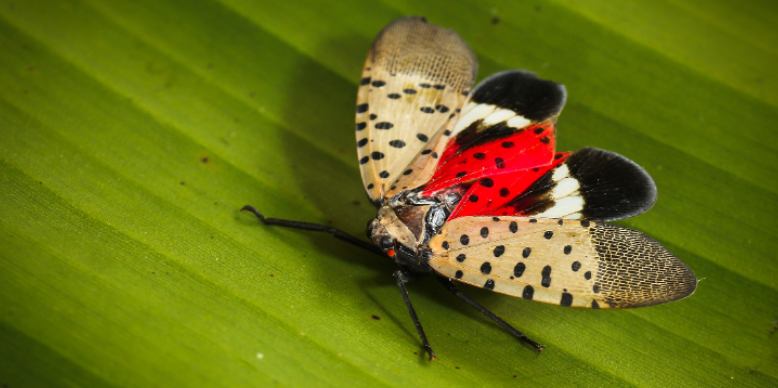
You’ve probably already met the spotted lanternfly in the most casual way. You go outside, and there they are. Dozens and dozens, clinging for life on your tree trunk and hopping away when you get close. Then, you might notice something sticky left behind on the tree (or your furniture even).
Annoying, but it's just a bug. Right?
Well, not really. In fact, the spotted lanternfly is treated as an agricultural emergency in New Jersey, and the reason might surprise you.
Spotted Lanternflies Don’t Eat Leaves (They Drain Sap)
Usually, pests chew on plants. You’ll see the holes on plants you’re trying to grow in the backyard.
But, these ones don’t leave holes. Lanternflies have tiny, piercing mouthparts that feed on sap. And they draw it directly from the source: woody stems and trunks. Then, the plant slowly loses the energy it needs to grow. This makes it difficult for any plant affected by lanternflies to produce fruit and thrive.
Then, there’s another problem. As lanternflies feed, they excrete honeydew, a sticky, sugar-heavy waste that coats everything. Then black, sooty mold grows on the honeydew, blocking photosynthesis, and degrading fruit quality.
It turns a once thriving, fruit-producing plant into a sad, half-hearted plant that doesn’t have much energy to produce anything.
That’s way more than a simple nuisance or “just another bug.”
What’s at Stake in New Jersey
Vineyards and farms all over New Jersey are taking the heat from these pesky lanternflies.
Here's how lanternflies affect a vineyard:
- Serious yield losses across the harvest
- Reduced sugar content in fruit within a single season
- Vine death after repeated years of feeding
Penn State researchers put numbers to the damage:
- $50.1 million per year and 484 jobs inside the quarantine zone
- $92.8 million and 927 jobs in a worst-case scenario
- $554 million and nearly 5,000 jobs if it spreads statewide
You can read the full economic assessment here.
Two industries heavily impacted by lanternflies:
- Nurseries lose stock to feeding damage and unintentionally transport them. Egg masses ride along on plants, pallets, and delivery trucks.
- Hardwood and timber impact is still being studied. Lanternflies feed on dozens of tree species, but we’re not entirely sure the extent of the damage.
Every County in New Jersey is Quarantined
The New Jersey Department of Agriculture has placed all counties in New Jersey under a spotted lanternfly quarantine (yes, Monmouth County, too).
Here’s how the quarantine affects you as a homeowner:
You have to check anything for lanternflies before you haul it off your property.
This could be:
- Firewood
- Landscaping and construction debris
- Outdoor items (like grills, patio furniture, tarps, mowers)
- RVs
- Other vehicles
Your Yard in Morganville is Part of This
Since farms seem to hold most of the impact from lanternflies, what does this have to do with you?
The answer is: a lot. Lanternflies don’t overwinter in farms. They do it right in your backyard.
In fact, suburban properties carry the host trees these insects prefer. Those populations survive winter as egg masses, then push outward to the farms and vineyards in the spring.
In short, your yard gives them a comfortable winter holiday so they can rest and multiply to wage war on New Jersey farms.
Here are host plants lanternflies love (and the NJDA recommends removing):
- Tree of heaven (the lanternfly’s favorite)
- Wild grape
- Oriental bittersweet
How to spot egg masses:
- Gray-tan, about an inch long
- Easy to mistake for a smear of dried mud
- Found on trunks, siding, rocks, grills, and firewood stacks
- Visible from September through spring
If you find any eggs, scrape them off, double bag them, and throw them out.
How Professional Treatment Helps With Lanternflies
Scraping egg masses and removing host trees can help with the ongoing lanternfly problem in New Jersey. But, it won’t do everything.
And that’s why we exist. At Mosquito Squad Plus of Central New Jersey, we provide spotted lanternfly control services for Morganville and surrounding areas.
Our trained technicians inspect your property to find where lanternflies are feeding and laying, then treat those areas using EPA-registered products applied according to label guidelines.
And if you'd prefer a plant-based approach, we also offer a natural treatment option made from botanical oils, lasting up to 14 days per application. These are two separate services with different formulations, so you can choose the one that fits your property.
No treatment clears an area entirely, but consistent treatment reduces their numbers and helps you (and the state of New Jersey) breathe a sigh of relief.
Learn more about our services in Morganville or browse our local blog for seasonal pest updates.
Seeing spotted lanternflies around your Morganville property? Call Mosquito Squad Plus of Central New Jersey at (732) 313-3932 or contact us online for a free quote.