What the Hills of Fort Mitchell Have to Do with Mosquito Season
Posted by Mosquito Squad
April 1, 2026
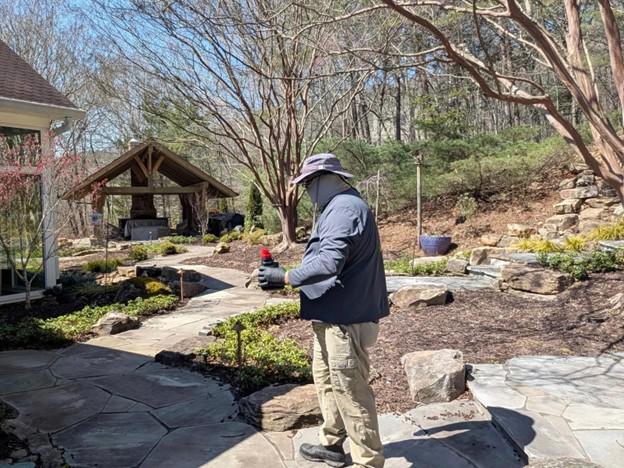
Fort Mitchell does not sit on flat ground. It never has. The city climbs from the Ohio River valley up through the rolling hills of Kenton County the way Northern Kentucky communities have always been built, into the hillside rather than across flat terrain. Lots drop away from the street. Wooded edges along the back of properties hold moisture longer than the open river plain to the north. Drainage running down toward Banklick Creek carries whatever has accumulated on those slopes after every rain.
That is the geography that shapes mosquito season here. Not a single dramatic water feature. Just the steady accumulation of what a hillside suburb does when water has to go somewhere.
Why Fort Mitchell's Terrain Builds Mosquito Pressure From the Inside Out
Banklick Creek runs through the eastern edge of Fort Mitchell before emptying into the Licking River near Latonia. The Banklick Watershed Council, a nonprofit dedicated to restoring and protecting the creek, has documented the watershed's topography as ranging from steep to gently sloping across more than 58 square miles of Kenton County. That topography means drainage from Fort Mitchell's residential hillsides feeds directly into the Banklick corridor. The shallow, slower-moving water that collects in the low spots along that drainage does not flush out quickly. It sits.
The University of Kentucky's mosquito control guidance is direct that mosquitoes need quiet, non-flowing water for their development and that periodic storms provide just such conditions across Kentucky's suburban landscape. In Fort Mitchell, where the hilly terrain creates natural low spots between properties and wooded back edges of lots slow evaporation under the canopy, those conditions show up after almost every meaningful rain event from March through October.
Fort Mitchell was incorporated in 1910 and most of its residential neighborhoods were built in the postwar decades of the 1940s and 1950s. That means the stormwater infrastructure running under these streets is seventy or more years old. Aging catch basins and drainage lines accumulate organic material over time, and the Northern Kentucky Health Department monitors mosquito populations in Kenton County each season specifically because mosquitoes spread disease in the region. The conditions that create that pressure are baked into the landscape of an older hillside suburb like Fort Mitchell in ways that newer flat subdivisions simply do not have to contend with.
The Licking River Corridor Adds Another Layer
If you have read what we wrote about Taylor Mill you already know what the Licking River's spring flood pulse does to mosquito season in that community just south of Fort Mitchell. The Banklick Creek drains toward the Licking River near Latonia before the Licking meets the Ohio. Fort Mitchell sits in that broader drainage system. The creek is not the Ohio River. It does not flood neighborhoods. But it stays wet when the terrain around it wants to hold water and that is enough to extend the breeding season on both ends.
Fort Thomas sits higher and to the east. We covered how elevation does not actually protect you from mosquito season in our Fort Thomas blog. Fort Mitchell is different from both communities. It is the hillside between the flood pulse terrain and the high ground, and what that means practically is that the drainage patterns here are their own problem with their own timeline.
The Species Active in Kenton County
Kentucky is home to over fifty mosquito species according to the University of Kentucky Department of Entomology. The ones that matter most to Fort Mitchell homeowners are the species that breed in quiet, organically enriched standing water, which is exactly what accumulates in older suburban drainage systems and shaded low spots between properties.
West Nile virus is the most commonly transmitted mosquito-borne disease in Kentucky. The CDC documents that it is spread by Culex mosquitoes that breed in standing water with high organic content, precisely the kind that collects in aging catch basins and shaded drainage areas in older Northern Kentucky hillside neighborhoods. About one in five people infected develop fever and other symptoms. The Northern Kentucky Health Department actively monitors mosquito populations in Kenton County each season for exactly this reason.
What Homeowners Try and Why It Rarely Keeps Up
The instinct is to address the obvious standing water. Empty the bird bath, clear the gutters, check the low spots after rain. The University of Kentucky recommends exactly those steps and they genuinely help at the margins.
The problem in Fort Mitchell is that a significant portion of the mosquito pressure is not coming from your yard. It is coming from the catch basin at the end of the street, the drainage corridor behind the back fence, the shaded low spot between your property and the neighbor's that neither of you controls. You can manage your side of the equation perfectly and still spend June through September swatting in your own backyard because the source of the problem is in the infrastructure and terrain around your lot rather than on it.
Consumer sprays knock back individual biting adults temporarily. They do not address the population cycling through the standing water in the drainage system around your neighborhood. By the time May arrives and the season feels established in Fort Mitchell it has been building since the first warm stretch of March. Neighbors in Edgewood and Erlanger deal with similar terrain-driven pressure for the same underlying reasons.
What Barrier Treatment Actually Does
The hillside drains. The creek runs. The catch basins sit. None of that changes. What you can change is whether mosquitoes find hospitable conditions when they arrive at your property.
Professional mosquito control works because it targets the resting zones where mosquitoes spend the hours between feedings rather than chasing individual adults after the fact. The University of Kentucky notes that adult mosquitoes prefer to rest in moist, shady areas such as dense vegetation during the daytime. In Fort Mitchell that means the shrub lines along the back fence, the shaded bed edges under the canopy, the wooded edges of lots that drop toward the Banklick drainage corridor.
Our mosquito control program for Fort Mitchell targets those harborage zones specifically on a recurring schedule through the active season. Treatments run every three weeks so there is no gap between visits where the population rebuilds unchecked. For properties near the Banklick drainage corridor or with significant wooded back edges, larval control can add a second layer by targeting mosquitoes before they ever reach the biting stage.
When to Start
The University of Kentucky documents that mosquitoes become active once temperatures consistently hold above 50 degrees Fahrenheit. In Fort Mitchell that threshold arrives in late March or early April during most years. By the time the season feels obvious in May it has been building for four to six weeks in the drainage corridors and shaded low spots around your neighborhood.
Most people call after the first outdoor gathering gets ruined or after the first bad night on the back porch. By then the population is already established. Getting a program started before April means you are ahead of it rather than behind it.
Get a free quote for mosquito control in Fort Mitchell and let us walk the property before the season gets ahead of you.