What Sitting Between Blackoak Ridge and Fort Loudoun Lake Does to Tick Season in Farragut
Posted by Mosquito Squad
March 31, 2026
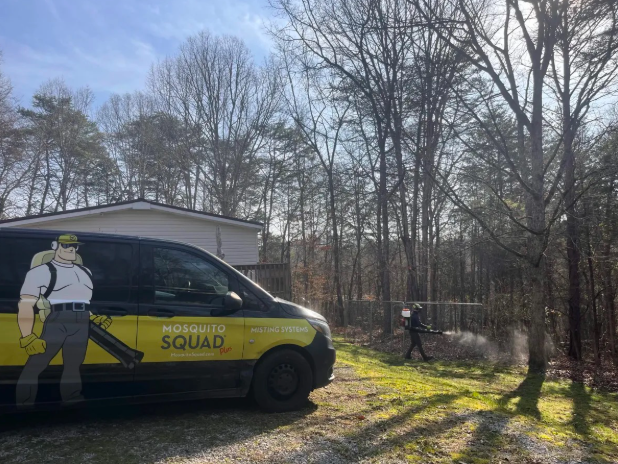
Farragut is not a neighborhood that announces itself the way some Knox County communities do. It does not have a river running through the middle of it or a dramatic elevation story. What it has is terrain that works quietly in the background. Blackoak Ridge rises to the north. Fort Loudoun Lake stretches along the south. In between, Farragut sits on rolling wooded hillside that has been filling in with residential lots for decades, and the back edges of those lots have a tick problem that a lot of homeowners figure out the hard way in their first spring.
That sandwich of ridge and lake is the geographic story of Farragut. It is also exactly what makes tick season here a different conversation than it is in the flatter Knox County suburbs to the east.
Why the Terrain Works Against You
Farragut sits in a hilly area between Blackoak Ridge to the north and the Tennessee River, which forms Fort Loudoun Lake, to the south. That topography means a large share of residential lots sit on rolling wooded ground rather than flat open terrain. The canopy is mature in the older neighborhoods. The drainage runs down toward the lake corridor. The shaded low spots between houses stay humid long after a rain event clears through.
The Tennessee Department of Health documents that tick-borne diseases are a growing concern statewide, with tick populations increasing in recent decades and six medically important tick species present in Tennessee. The department is direct that ticks dwell in grassy, brushy, or wooded areas and that the black-legged tick poses a threat even during winter when temperatures stay above freezing. In Farragut's wooded residential terrain that is not a hypothetical. It is a description of most of the back half of a typical lot in this community.
Fort Loudoun Lake adds another layer. Its 379 miles of shoreline and the wooded tributary corridors feeding into it from the Farragut side create consistent moisture and canopy shade along the southern edge of the community. Deer move along those corridors year round, and wherever deer travel consistently, tick populations follow. The CDC is clear that deer ticks strongly prefer yards that border wooded areas over open sunny lawns. A home in Farragut backing up to any of those lake-adjacent or ridge-adjacent wooded edges is exactly the kind of property where that pressure is real and ongoing.
Fort Loudoun Lake drives mosquito pressure in the same corridor too. We covered that in detail for the community just southeast of here in our Concord mosquito blog if that is also on your radar this season.
The Ticks You Are Actually Dealing With
Three species do most of the work in Knox County and they do not all operate on the same schedule.
The Lone Star tick is the most aggressive and the one most Farragut homeowners encounter first. The Tennessee Department of Health's tick species page identifies it as an extremely aggressive tick found throughout the southeastern United States that can transmit ehrlichiosis, tularemia, Heartland virus, southern tick-associated rash illness, and Alpha-gal syndrome. That last condition is worth knowing about specifically. Alpha-gal is a permanent allergic reaction to red meat triggered by a single tick bite. The Tennessee Department of Health has formally listed it as a disease of concern and cases are rising across the state. Unlike most ticks that wait passively on vegetation for a host to brush past, Lone Stars actively pursue movement. They turn up in maintained yards near the tree line all the time, not just on trails.
The black-legged deer tick draws increasing concern in east Tennessee. The Tennessee Department of Health notes that anyone who spends time outdoors in Tennessee is at risk from this species and that it dwells not just in forests but in the property surrounding Tennessee homes, especially where yards sit next to brushy areas or have tall grass and leaf litter. Its nymphs are active in spring and early summer, are roughly the size of a poppy seed, and can go unnoticed for days. Shaded woodland edges and moisture-retaining drainage corridors are their preferred terrain, which describes the back edge of a significant share of Farragut's residential lots.
The American dog tick tends to show up in the yard itself rather than deep in the woods, particularly at the transition where mowed lawn meets wooded or overgrown vegetation. Anyone with dogs going in and out of a wooded back area in Farragut is dealing with this one routinely. The Karns mosquito blog is worth a read for anyone trying to understand how Knox County terrain shapes pest pressure differently depending on where you sit in the county.
What Homeowners Try and Why It Falls Short
The standard first move is landscape work. Mow more frequently, pull the brush back from the fence line, clean up the leaf accumulation along the back of the property. The CDC recommends exactly those steps, including placing a three-foot barrier of wood chips or gravel between lawn and wooded areas to restrict tick migration. It is not wrong and it helps at the margins.
The problem specific to Farragut is that the tick pressure is not originating in your yard. It is moving through your yard from the wooded hillside above it, the lake-adjacent drainage corridor below it, or both. Deer do not stop at a mulch border. Neither do the mice and small mammals carrying larval ticks back into your lawn edges season after season. You can manage your side of that edge perfectly and still have a meaningful tick problem because the source is on the other side of your fence line and the terrain is not changing.
Natural sprays get tried next. Cedar oil, essential oil blends, diatomaceous earth along the perimeter. The CDC is direct that natural products are not proven effective against ticks. In Farragut's humid Knox County summers, anything without real residual staying power breaks down before it does meaningful work. Neighbors in West Knoxville and Maryville deal with adjacent versions of the same wooded residential lot pressure for the same terrain reasons.
What Tick Treatment Actually Does
The ridge to the north, the lake to the south, the wooded lots in between. That terrain does not change between seasons. What you can change is whether ticks find hospitable conditions when they arrive at your yard edge.
Professional tick control works because it targets the zones where ticks actually live rather than the open lawn where they rarely go. The Tennessee Department of Health recommends remaining vigilant and conducting tick checks whenever returning from outdoors. A properly targeted treatment program reduces what those checks find by addressing the population where it lives rather than where it occasionally wanders.
Our tick control program for Farragut targets the transition zones specifically. The shrub beds along the back fence. The shaded drainage areas where moisture collects after rain. The vegetation edge where your mowed lawn gives way to the rolling wooded terrain that defines Farragut's residential character. Treatments run on a recurring schedule through the active season so there is no gap between visits where the population quietly re-establishes.
For properties with significant wooded boundaries, tick tubes can add a second layer by targeting the small rodent hosts that carry larval ticks back into your yard before they ever reach the biting stage. The CDC recommends consulting a licensed applicator for properties with significant tick pressure and notes that targeted pesticide use can meaningfully reduce tick populations in treated areas.
When to Start
The Tennessee Department of Health notes that while ticks are most active in warmer seasons, the black-legged tick is a threat any time temperatures stay above freezing. In Farragut's wooded terrain, that means tick pressure does not fully shut down during mild winters the way it does on open flat lots. A stretch of warm January or February days is enough to bring Lone Star activity back before most homeowners have thought once about the season.
Most people call after they find a tick on a child or a dog. By that point the season is already established. Getting a program in place before April means you are managing the season rather than chasing it.
Get a free quote for tick control in Farragut and let us walk the property before the season gets underway.