Knoxville Gets More Rain Than Seattle. Mosquito Season Does the Math.
Posted by Mosquito Squad
March 6, 2026
Most people have heard this one: Knoxville gets more annual rainfall than Seattle. It usually comes up when someone is explaining the summer humidity. What it actually explains is why backyards in Concord and west Knox County are some of the most productive mosquito environments in Tennessee, and why waiting until April to do anything about it puts you weeks behind.
The rainfall is distributed across all four seasons here, not concentrated in a wet winter the way it is in the Pacific Northwest. That matters for mosquitoes because it means the ground in Knox County rarely has a chance to fully dry out. By the time February temperatures start climbing, the moisture is already there. The season does not need to wait for rain. It just needs warmth.
We’ve written about early-season mosquito timing for Knoxville-area homeowners before, but the rainfall angle is one that does not get talked about enough, and it is the reason Concord specifically tends to see pressure earlier than most of the metro.
What Fort Loudoun Lake Adds to the Equation
Concord sits along the south shore of Fort Loudoun Lake, the TVA reservoir that runs through west Knox County and into Loudon County to the southwest. The lake covers roughly 14,600 surface acres and holds warmth through late winter the way large bodies of water do. Neighborhoods along Northshore Drive, around Concord Park, and backing up to the lake shoreline are dealing with a moisture environment that does not behave the way an inland neighborhood does.
The drainage corridors that run from Concord’s residential areas down to the lake shoreline stay wet well past the last rain. They are in partial shade for much of the day, which slows evaporation. They collect leaves and organic debris over winter that retains moisture at the soil level even when the surface looks dry. Mosquito eggs survive through winter in exactly these kinds of conditions and hatch in response to warming temperatures and returning moisture. Those drainage corridors along the lake are among the first places in Knox County to produce a generation each spring.
The Canopy and Leaf Litter Problem Nobody Talks About
West Knox County has some of the heaviest hardwood canopy in the Knoxville metro. Oak, hickory, tulip poplar, these trees drop significant leaf litter every fall, and in shaded, low-lying yards, that litter does not fully decompose before the next mosquito season begins. It packs down in corners along fence lines, under decks, in the lower edges of landscape beds, and in the spaces between tree roots.
That packed leaf litter is not just an aesthetic issue. Research published in Parasites and Vectors found that decaying leaf litter in shaded areas significantly increases larval mosquito habitat by retaining moisture and creating the microenvironments that support egg development. In heavily canopied suburban neighborhoods like those throughout Concord and the Farragut area, that translates to consistent, early-season breeding habitat distributed across the yard rather than concentrated in a single obvious water source.
It also means that clearing standing water from obvious locations, gutters, birdbaths, low spots in the lawn, addresses only part of the problem. The shaded, leaf-covered areas along your property edges are producing pressure independently of anything that looks like water.
What Tennessee’s Own Numbers Show
The Tennessee Department of Health tracks mosquito activity across the state and has consistently identified Knox County and the surrounding east Tennessee region as one of the earlier-activating areas in the state, largely because of the combination of rainfall, humidity, and temperature patterns in the Tennessee Valley corridor. The department’s mosquito control guidance for Tennessee homeowners recommends beginning surveillance and treatment before peak activity, not after.
The UT Extension publication on mosquito management in Tennessee reinforces this, specifically noting that Aedes albopictus, the Asian Tiger mosquito, is now the dominant pest mosquito species across Tennessee’s suburban and urban areas. It breeds in containers and natural depressions, bites during the day, and is well established in Knox County. That last part explains why homeowners in Concord get bitten on a Tuesday morning in the garden and assume it must have been a fluke. It is not a fluke. It is a species that operates on a schedule most people are not accounting for.
When to Start Mosquito Treatment in Concord
For most east Tennessee years, late February through mid-March is the right window. Knoxville sits at a lower elevation than the surrounding ridge lines, and the valley floor warms ahead of the broader region. That early warmth, combined with the persistent ground moisture from winter rainfall, means the conditions for first-generation development arrive before most homeowners are thinking about it.
Here is what to look for in your yard:
- Daytime temperatures holding in the low 60s or above for several consecutive days
- Shaded low areas still damp more than a week after the last rain
- Leaf litter packed in corners of the yard that has not broken down since fall
- The first evening where you think about eating dinner outside and actually consider it possible
If you are in Concord, along Northshore, or anywhere west of Kingston Pike near the lake, those conditions tend to arrive before the rest of the county. The mosquito barrier treatment approach works best when it starts before the population establishes. Catching it in late February costs the same as catching it in April. The results are not comparable.
The Yard by the Lake Should Be the Best One on the Street
Living near Fort Loudoun Lake is the reason most people chose Concord. The lake views, the greenways, the proximity to the water. None of that is worth anything if mosquito pressure means you can’t actually use the yard from March through October.
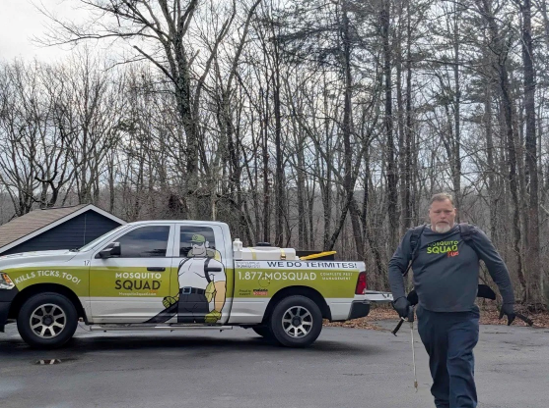
Consistent mosquito control starting before the season peaks is what makes the difference between a yard people use and one they avoid. Mosquito Squad serves Concord, Farragut, and communities across the Knoxville area. The Knoxville mosquito control team is available now, before the lake corridor warms up and the first generation gets established. That is the window that matters.