Beaver Creek Runs the Mosquito Calendar in Karns
Posted by Mosquito Squad
March 20, 2026
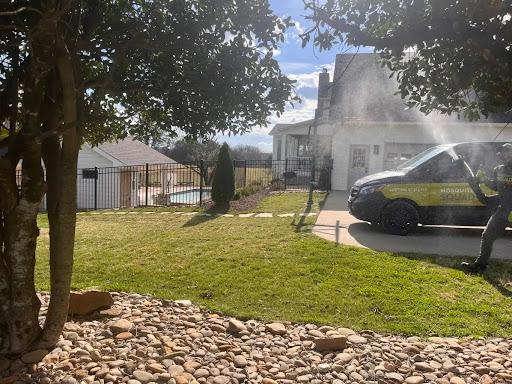
Karns has always had that feeling. Big lots, older farmhouses with actual character, Beaver Creek running through the valley, Melton Hill Lake sitting at the edge of the community. People who grew up here stayed because it never lost that west Knox County feel, and people who moved here did it on purpose because they were done with tighter subdivisions and smaller yards closer to town.
What most Karns homeowners don't connect until it's already too late in the spring is that the same creek and the same terrain that makes a Karns property worth having also makes mosquito season start earlier than anywhere else in the area. Beaver Creek doesn't slow down in late winter. It runs, the banks stay wet, the shaded low areas hold moisture for weeks, and by the time the ground actually feels like spring the first generation is already underway. The creek that sold you on the property is also running the mosquito calendar whether you planned for it or not!
Beaver Creek Is Not Just a Pretty Backdrop
Beaver Creek runs through the heart of the Karns community from northeast to southwest before joining the Clinch River near Melton Hill Lake. The Knox County Stormwater Management Program has documented Beaver Creek as one of the primary drainage corridors in western Knox County, and the creek's floodplain areas stay wet through late winter in most east Tennessee years.
The low-lying areas along the creek and its tributaries don't dry out between rain events the way open ground does. Leaf debris packs into the shaded areas along the banks and retains moisture at the soil level even when the surface looks dry. The CDC's mosquito habitat documentation is clear that shallow, organic-enriched standing water in shaded areas is among the most productive mosquito breeding environments that exist. Beaver Creek delivers those conditions along a significant portion of the Karns community starting in late February most years.
If your property is anywhere near the creek or any of its drainage tributaries, and in Karns that describes a lot of yards given how the valley drains, you're dealing with a breeding source that's active weeks before most homeowners pick up the phone.
Old Farming Soil Holds Water Differently
Karns was called Beaver Ridge before it had its current name, and the agricultural character of the community left behind something that newer suburbs don't have. Rich, organic loam-heavy soil throughout the valley that retains surface moisture significantly longer than the compacted fill typical of newer residential development. University of Tennessee Extension research on Knox County soils notes this moisture retention pattern across the west Knox corridor.
For a Karns homeowner on an older lot, that means the low corner of your yard, the shaded area under the tree line, the space behind the detached garage where water pools after rain, all of it stays wet longer than it would on a newer property elsewhere in Knox County. Five to seven days of standing water in a low spot is enough time for the first generation to develop. On old farmland soil in a shaded Karns yard, that window opens earlier and stays open longer than most people realize.
Newer Subdivisions Are Adding a Second Layer
While the older Karns properties deal with natural drainage and agricultural soil, the newer subdivisions going up across the community bring their own set of conditions. Every new subdivision built in Knox County comes with stormwater retention infrastructure required by the Knox County Stormwater Management Program. Retention ponds, drainage swales, engineered runoff systems built into the plat.
Those features hold water permanently by design, and the EPA's integrated mosquito management guidance specifically identifies suburban stormwater retention features as among the most productive mosquito breeding environments in the country. The result in Karns is two different moisture retention mechanisms operating across the same community at the same time. Older properties with natural drainage, newer properties with engineered drainage. Both productive. Both active early.
What's Actually Biting You Out Here
The dominant pest mosquito species across Knox County suburbs is now Aedes albopictus, the Asian Tiger mosquito, according to UT Extension's mosquito management publication. On a large Karns lot with creek drainage or shaded natural edges, this species has everything it needs to establish early and build fast.
What makes it frustrating for Karns homeowners specifically is that it doesn't behave the way most people expect a mosquito to behave. It's active during the day, not just at dusk. It bites while you're mowing, while the kids are playing in the backyard, while you're checking on the garden on a March afternoon. By the time it's noticeable it's been there for weeks. A barrier treatment program that starts before the creek activates is the one that actually gets ahead of it.
Ticks Come With the Territory Out Here
Large lots, creek corridors, wooded ridges between subdivisions, Karns has all of it. The Tennessee Department of Health tracks tick-borne illness across the state and has identified the west Knox corridor as an area of consistent tick activity given the mix of established residential development and natural wooded terrain.
Both the Lone Star tick and the black-legged tick are well established in this part of Knox County. If you have kids or dogs using a large lot, or if your property has any natural edge or wooded buffer, tick control deserves the same attention as mosquito control. Our 6 C's of tick control is worth reading if you want to understand how to approach tick management on a property with Karns terrain.
When to Start and What to Watch For
Late February through mid-March is the right window for most Karns years. Here's what tells you the season has arrived whether you're ready or not.
Low areas near Beaver Creek or any natural drainage still holding water five or more days after the last rain. Gnats appearing along the creek bank or in any shaded low area near your property. The first afternoon where the kids come in from the backyard with bites you weren't expecting in March. That's not a random occurrence. That's Beaver Creek telling you the season started.
The Space You Chose Is Worth Using
People chose Karns for the lot, the creek, the community feel, the sense that there's still some breathing room left in west Knox County. A mosquito season that builds unchecked from late February forward turns that outdoor space into something you manage instead of enjoy.
Mosquito Squad serves Karns, Farragut, West Knoxville, Powell, and communities throughout the Knoxville area. We've also written about why Knoxville gets more rain than Seattle and what that means for the whole metro and why mosquito control in Concord starts earlier than most homeowners expect. The Knoxville mosquito control team is available now. Beaver Creek doesn't wait for April.