The Bridle Trails and Wooded Lots of Indian Hill Have a Summer Secret
Posted by Mosquito Squad
April 1, 2026
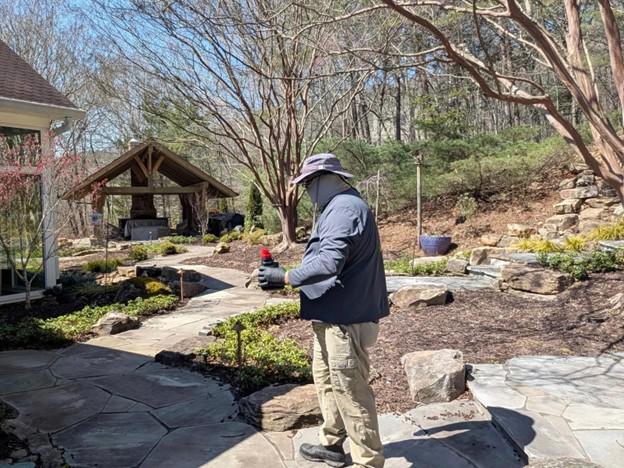
Drive through Indian Hill on a summer morning and what you notice first is not the houses. The estate lots are set back far enough from the road that you often cannot see them at all. What you see instead is the canopy. Dense mature hardwood rising on both sides, bridle trails disappearing into the tree line, the Little Miami River corridor running along the eastern and southern edge of the community before it earns its federal designation as a National Wild and Scenic River. It is one of the most deliberately preserved residential landscapes in Ohio, nearly 20 square miles of rolling wooded terrain governed since 1941 by a charter whose entire purpose has been to keep it that way.
Most people who spend a summer afternoon in that landscape come inside itching without knowing why.
What Indian Hill's Landscape Actually Creates
The Village of Indian Hill maintains 75 miles of bridle trails running through wooded green areas, protected easements, and private lands across the community. Lots average three to five acres. The Indian Hill Equestrian Club documents that these trails traverse green areas land and private property covering an estimated 75 linear miles, with the village's own ordinances designating their use for horses and hounds only. The wooded corridors those trails run through are precisely what chiggers need to establish and sustain populations through a long Ohio season.
The Ohio State University Extension is direct that chiggers thrive in humid, overgrown, grassy habitats, especially those frequented by small mammals and birds, and that they are found in transitional zones from fields to paths and scrubby growth to manicured landscapes. Indian Hill is defined by those transitions. The edge where a maintained estate lawn meets the wooded canopy behind it. The bridle trail corridor running along the back of a property. The shaded low spot where a creek tributary drains through a ravine between lots. These are the zones where chigger populations concentrate, and in Indian Hill they run for miles in every direction.
The Little Miami River, designated a National Wild and Scenic River and forming the eastern and southern border of Indian Hill, adds the moisture dimension. The OSU Extension documents that chigger mites overwinter as adults in soil and protected places and emerge when temperatures rise above 60 degrees Fahrenheit, preferring humid soils of grassy fields, scrubby weedy areas, and lawns as egg-laying sites. The riparian corridor along the Little Miami and its tributaries running through Indian Hill stays humid well into summer and provides exactly the protected soil environment where chigger populations overwinter and re-establish each season.
What Chiggers Actually Are and Why Indian Hill Homeowners Get Confused
Most people who get chigger bites in Indian Hill do not know it until the next day. The OSU Extension explains that chigger mites are yellow to reddish in color but are typically too small to see without magnification. The larval mites climb to the edge of grass blades or other plants, waiting to attach to the legs of passing animals and humans. When you walk through a wooded edge, sit on the grass near a shaded area, or work in a garden bed along the back of a property in Indian Hill, you pick them up without feeling anything at the time.
The Cleveland Clinic notes it can take up to three hours after contact before any symptoms appear. By then you are inside, the mites are already feeding, and most people spend the next twenty minutes trying to figure out why they itch so badly around their waistband and ankles after spending an afternoon in their own backyard.
The confusion is compounded by a persistent myth. Chiggers do not burrow into the skin. The OSU Extension clarifies that the larval mites attach on the surface or at the rim of a hair follicle and inject digestive enzymes into skin, forming a stylostome, a tube-like channel through which they feed. The intense itching that follows is the body's prolonged reaction to those enzymes and can last one to two weeks after a single encounter. In Indian Hill, where residents spend time on large estate properties with significant wooded edge exposure, multiple encounters in a single season without ever identifying the source is a common pattern.
When Chigger Season Runs in Indian Hill
The OSU Extension documents that the greatest numbers of chiggers in Ohio are present in June through August, with females capable of producing several generations a year resulting in high numbers and a prolonged season. Emergence begins when soil temperatures consistently hold above 60 degrees Fahrenheit. In Indian Hill that typically arrives in late April or early May.
What that means practically for estate properties along the Little Miami corridor is that chigger pressure can run from May through early October in most years. A property with significant wooded edge exposure along a bridle trail corridor or creek drainage does not get a meaningful break in that pressure during the warm months. The same conditions that make Indian Hill one of the most beautiful residential communities in Ohio sustain chigger populations through the entire outdoor season.
If you want to understand how the Little Miami corridor drives pest pressure in neighboring communities, our Loveland mosquito blog covers a related but different side of the same river system.
What Homeowners Try and Why It Does Not Work Here
The standard advice is to mow frequently, keep grass short, clear brush from the edges, and wear long pants and DEET-treated socks when spending time near the wooded areas. The OSU Extension recommends brush control, mowing lawns, and adjusting landscape features to increase sun exposure and airflow, which makes yards less inviting to mites.
That is sound guidance for a standard suburban lot. It does not fully apply to a three to five acre estate property in Indian Hill where a maintained lawn transitions directly to a wooded lot edge backing up to bridle trail corridors or Little Miami tributary drainage. You cannot mow the bridle trail. You cannot clear the ravine on the other side of the property line. And even on the managed portion of the property, the shaded garden beds and the edge of the wooded canopy create persistent humidity that supports chigger populations regardless of how well the lawn itself is maintained.
Consumer repellents help during individual outdoor activities but do not address the population living in the landscape. The OSU Extension notes that hot-spot treatments are an option for quick knockdown in the short term. The key word is hot-spot. Effective chigger control targets the specific zones where the population concentrates rather than broadcasting across the entire property.
What Targeted Chigger Treatment Does
Professional chigger control works because it identifies and treats the actual population zones rather than the open lawn where chiggers rarely concentrate. In Indian Hill those zones are specific and predictable. The shaded edge where the maintained lawn meets the wooded canopy. The garden beds along the back of the property under mature tree cover. The drainage areas running toward Little Miami tributaries. The unmaintained grass along bridle trail corridors bordering the property.
Our chigger control program for Indian Hill targets those harborage zones on a recurring schedule through the active season. Treatments address the population where it lives rather than chasing the symptoms after contact. For estate properties with significant wooded edge exposure along the Little Miami corridor or bridle trail system, a program that runs from May through September provides the coverage the terrain actually requires.
Blue Ash and Deer Park are in the same service area if you have neighbors there dealing with similar wooded lot pressure this season.
When to Start
The OSU Extension documents that chigger mites emerge when temperatures rise above 60 degrees Fahrenheit and that females produce several generations a year, resulting in sustained pressure from late spring through early fall. In Indian Hill, where the terrain sustains humidity and protected ground cover well into the season, starting treatment before Memorial Day gives you the best chance of staying ahead of the first generation rather than reacting to a population that has already established across your property.
Most Indian Hill homeowners call after a week of unexplained itching following time in their own backyard. Starting before that happens means you never have to figure out what bit you.
Get a free quote for chigger control in Indian Hill and let us walk the property before the season gets established.