Fairfield's Retention Ponds Work Great. For Mosquitoes.
Posted by Mosquito Squad
March 6, 2026
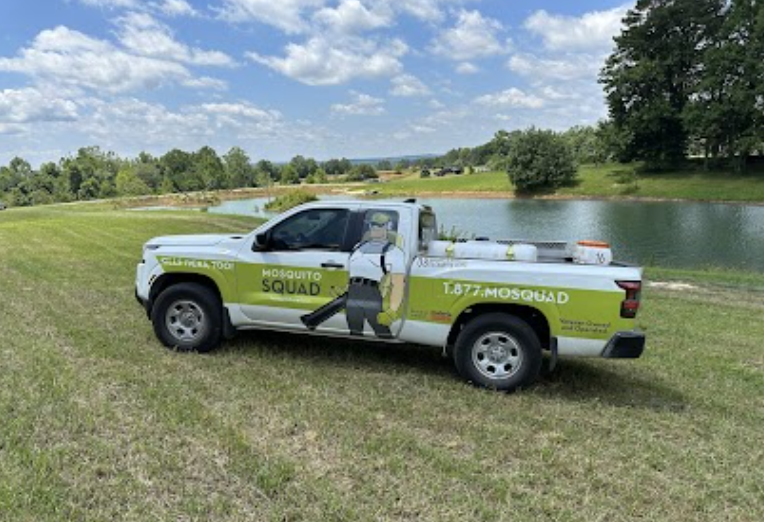
Drive through Beckett Ridge or almost any planned subdivision in West Chester Township and you will pass at least one retention pond before you reach the first residential street. Most of them have a fountain, a decorative edge planting, and a sign from the HOA explaining who maintains the grass around it. What none of them have is any design feature that limits mosquito production. They were built for stormwater management, and they do that job well. As mosquito habitat, they are extraordinarily productive, and they sit within a few hundred yards of every backyard in the neighborhood.
Fairfield and the communities along the I-75 corridor north of Cincinnati were developed heavily through the 1980s and 2000s. That era of suburban construction came with mandatory stormwater retention infrastructure baked into every subdivision plat. Butler County and Warren County homeowners did not build these features, did not ask for them, and largely do not think of them as their problem. But the mosquitoes that breed in them are absolutely the neighborhood’s problem by May.
The same general timing dynamic applies across southwestern Ohio. Our earlier post on mosquito season timing in Centerville covers how the Ohio watershed drainage accelerates the spring calendar. Fairfield and West Chester see that same acceleration, with a built environment that adds the retention pond layer on top of it.
The Great Miami River Adds a Second Layer to Fairfield’s Spring
The Great Miami River runs through Fairfield before continuing south toward Hamilton and the lower Butler County communities. In March and April, the river rises. That is not unusual or a sign of anything wrong. It is a normal spring pattern for a river fed by snowmelt and spring rainfall across a large watershed. What the rise and recession leave behind is a zone of floodplain pooling along the river’s edge through the city that takes time to drain and provides another early-season breeding source before the subdivision retention ponds have even fully warmed.
The combination of floodplain seasonal pulse and the engineered stormwater retention throughout the planned communities north and east of Fairfield means the mosquito pressure builds from two sources simultaneously in spring. One is ecological. One was approved by a planning commission in 1994. Both produce the same outcome for the homeowner trying to use their backyard in May.
Why Subdivision Retention Ponds Are a Mosquito Problem, Not a Mosquito Solution
Retention ponds in planned developments are built to a civil engineering standard, not an ecological one. They hold water permanently, which is exactly what a wet detention basin is designed to do. That standing water, in a basin that receives runoff from roads, lawns, and parking areas, accumulates organic material over time. Organic-enriched standing water is the preferred breeding environment for Culex pipiens, the northern house mosquito, which is the most common mosquito species in Butler County and produces the majority of the nuisance pressure that Beckett Ridge and West Chester homeowners experience from late spring through summer.
According to Ohio State University Extension guidance on mosquito management, retention and detention ponds with poor water circulation and high organic load are among the most productive standing-water mosquito breeding sites in Ohio’s suburban landscape. The fountain in a subdivision pond creates the appearance of water movement, but it does not circulate enough volume to interrupt breeding along the shallow margins and in the organic debris that accumulates around the edges.
The HOA maintains the grass around the pond. The county manages the stormwater function. Nobody is managing the mosquito production. That gap falls on the homeowner.
What the Yard Environment Looks Like at the Property Level
Beyond the retention pond, the individual yard conditions in Fairfield and West Chester neighborhoods add to the picture. Newer construction in these communities often involves compacted clay fill, especially in subdivisions developed on formerly agricultural land, and compacted fill drains more slowly than native topsoil. Low areas in these yards hold water after rain for five to seven days in early spring, sometimes longer in shaded sections.
Gutters clog with debris from the ornamental trees that are standard in planned community landscaping, Bradford pears and ornamental cherries along subdivision streets, pin oaks and maples in backyards. A clogged gutter in March is a standing-water breeding site that a homeowner may not notice until the ladder comes out for a different reason. The CDC identifies gutters and low yard areas as primary residential mosquito breeding sites for exactly this reason.
The result for a Beckett Ridge or Olde West Chester homeowner is a yard that receives pressure from multiple directions: the retention pond within walking distance, the low corner of the lawn that holds water after rain, and the gutters that were last cleared in the fall. Any one of those is manageable. All three running simultaneously from late March onward is what makes May and June feel unworkable.
When to Start Mosquito Control in Fairfield and West Chester
Late March through early April is the right window for most Butler County years. The retention ponds warm faster than natural water bodies because they are shallow and receive sun exposure from their open location within subdivisions. That means they reach the temperature threshold for mosquito breeding before yards or wooded areas do. These are the local indicators worth watching in Fairfield, Beckett Ridge, and Olde West Chester:
- The subdivision retention pond developing a faint green or yellow-green tint at the surface edges. That algae growth signals the water has warmed, and mosquito breeding begins at the same temperature that supports algae.
- Gnats appearing along the walking path that circles the pond or along any low drainage area. Gnats and mosquitoes share a temperature calendar. When gnats are active near water, mosquito development is already underway.
- Low areas of your lawn or the swale between your yard and the neighbor’s still holding water three to five days after the last rain. Compacted fill drains slowly and that window is enough for early breeding activity.
- Bradford pear trees blooming along subdivision streets and commercial corridors. They are among the earliest-blooming trees in Butler County and a reliable visual marker that the I-75 corridor has hit early spring temperatures.
- That first stretch of evenings above 55 degrees where you open the back door and start thinking about the yard. If you are thinking about it, the mosquitoes already have a three-week head start.
If you are in Fairfield, Beckett Ridge, West Chester Township, or Olde West Chester, the combination of the Great Miami corridor and the retention pond infrastructure means your season starts earlier than the calendar suggests every year.
The Backyard You Paid For Should Work for the Whole Season
The retention pond in your subdivision is not going anywhere. The Great Miami River will continue to flood its banks in March. The compacted fill in the low corner of your yard will continue to hold water through April. None of those conditions are fixable. What is addressable is the mosquito population that uses them, and a barrier treatment program that starts before the population establishes is the one that actually changes how the season feels.
Mosquito Squad serves Fairfield, Beckett Ridge, West Chester Township, Olde West Chester, and communities throughout the greater Cincinnati area. The Cincinnati area mosquito control team is available now. The retention pond is already warming. For homeowners who want to explore the full range of mosquito and pest control services available for the season, including natural treatment options for households with concerns about conventional yard chemicals, those conversations happen before the season runs away from you.