Birmingham’s Mosquito Season Has Changed. What That Means for Meadowbrook and the 280 Corridor.
Posted by Mosquito Squad
March 6, 2026
Most Birmingham homeowners start thinking about mosquitoes in May, right around the time the first outdoor gathering gets ruined. By then, the population is already established and eggs have already hatched. The yard you planned to enjoy all spring has been working against you for six whole weeks.
That pattern is especially true in the Meadowbrook area and along the 280 corridor toward Highland Lakes and Shoal Creek. The terrain here, the tree canopy, the creek drainages, the way warm air settles into the lower elevations off the ridge, all of it creates conditions that favor early mosquito activity. Earlier than most homeowners expect, and earlier than most of Birmingham proper.
The research backs it up. A study published in Plants (2023) found that tree and shrub coverage accounted for more than 55 percent of the variation in mosquito abundance at urban sites. And a 2023 study in Ecological Applications confirmed that canopy cover, elevation, and drainage hydrology are among the primary environmental predictors of local mosquito species distribution across U.S. urban areas. The 280 corridor checks all three boxes.
Which raises the question actually worth asking: not when mosquitoes show up, but why they show up when they do in this specific part of the metro, and what that means for when you need to act.
When Mosquito Season Actually Begins in This Part of Alabama
The textbook answer is that mosquitoes become active once temperatures consistently stay above 50 degrees Fahrenheit. That is the threshold at which the species common to central Alabama, primarily Aedes aegypti, Culex quinquefasciatus, and the Asian Tiger mosquito, begin to feed, breed, and establish populations. In the Birmingham area, that temperature range arrives in late February to mid-March during most years, a timing pattern we covered recently for homeowners in nearby Acton as well.
What makes this more relevant now than it was a decade ago: Birmingham has experienced 30 more mosquito-suitable days per year than it did in 1979 according to analysis by Climate Central, the independent science and news organization. That is the largest increase of any city tracked across Alabama. The season is not just starting a little earlier. It is meaningfully longer on both ends, spring and fall.
What that means practically: homeowners in Meadowbrook, Highland Lakes, and the surrounding Shelby County line communities who are waiting for late April to schedule their first treatment are already behind.
Why the 280 Corridor Gets Hit Earlier Than Central Birmingham
Where you live within the Birmingham metro actually shapes when your mosquito season starts, and that part does not get talked about enough. Meadowbrook and Highland Lakes sit in a stretch of terrain that slopes toward the Cahaba River basin. The land holds water. The tree canopy is heavy. Low areas that collect rain take longer to dry out because they rarely get direct sun, and the whole corridor just stays damper, longer than most of the metro.
That moisture is the starting point. Aedes mosquitoes, the species most common to this part of Alabama, lay eggs in and around still water, and those eggs can survive dry conditions through winter before hatching once water returns. It does not take a pond to make that happen. A few inches sitting in a low corner of the yard, water backing up under a deck, a stretch of drainage that stays wet for days after rain stops. The landscape along this stretch of the 280 corridor has all of it, and it does not need much to get the first generation going.
The tree canopy compounds it. Adult mosquitoes rest in shaded vegetation during the day, and thick canopy means slower evaporation, more moisture retention, and more places for them to wait out the daylight hours. Open-lot neighborhoods dry out faster and give mosquitoes fewer places to hide. Meadowbrook and Highland Lakes are not open-lot neighborhoods. The mosquito pressure shows up earlier here because the conditions for it arrive earlier.
What Most Homeowners Try First (And Why It Only Goes So Far)
Most people wait. They wait until they are getting bitten at dusk, then they grab citronella candles or pick up something from the big-box store. None of that is wrong, but by then the population is already established. You are reacting to something that has been building in your yard for weeks.
Barrier treatments work differently. Instead of repelling individual mosquitoes as they reach you, a barrier spray targets the resting and harborage areas where mosquitoes spend most of their time, the underside of foliage, shrub lines, shaded areas along fence lines and structures. A properly applied barrier treatment reduces the population in those harborage areas before they can fully establish.
A review of more than 44 mosquito control studies published in the Journal of Arthropod-Borne Diseases found that barrier treatments consistently reduced mosquito populations, and that timing was one of the biggest factors in how well they worked. Getting in front of the population before it establishes is not just a preference. It is genuinely more effective.
The Case for Starting Before You Think You Need To
A three-season randomized trial found mosquito populations about 59 percent lower in treated areas than in untreated ones. That kind of reduction does not come from a single spray in May when everyone starts complaining. It comes from consistent treatment, starting before the season has a chance to get going.
That research, published in the New England Journal of Medicine in 2025, and it confirms what experienced mosquito control operators have seen season after season: getting ahead of it works. Chasing it does not, at least not nearly as well.
For homeowners in Meadowbrook and the surrounding communities, that window opens in late February. Not April. Not May, when the yard is already working against you.
When to Start Mosquito Treatment in Meadowbrook
For central Alabama, late February through mid-March is the right window in most years. The shift in thinking that matters: you are not waiting to see mosquitoes. You are treating the conditions that let them establish. That is a different approach, and it is the one that actually works.
Here is what to watch for in your yard:
- Daytime temps holding in the low 60s or above
- Standing water still sitting in the same spots three or four days after rain
- Low, shaded corners of the yard starting to show new growth
- That first mild evening where you walk outside and actually want to stay out there
If you are in Meadowbrook, Highland Lakes, or anywhere along the 280 corridor toward Shelby County, those signs show up before most of Birmingham sees them. That is the window. Do not wait for April to find out you missed it.
The Bottom Line for Birmingham-Area Homeowners
Mosquito season in central Alabama is not a summer problem. It is a spring-through-fall problem, and in communities like Meadowbrook where the terrain and tree cover create favorable conditions, it starts earlier than the rest of the metro. Getting ahead of it is not about being overly cautious. It is just how the math works when you understand what you are dealing with.
If you want to actually use your yard this spring, the time to think about mosquito control in Meadowbrook is now, not the first week someone gets bitten at a backyard cookout.
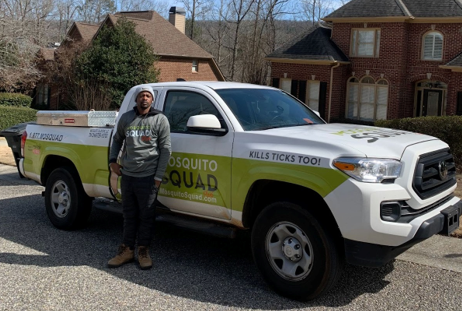
Mosquito Squad serves Meadowbrook, Highland Lakes, Cahaba Heights, and surrounding communities throughout the greater Birmingham area. Contact us to schedule your first barrier treatment before the season gets ahead of you.