
Weather Dependent Pests
Posted by Emma Grace Crumbley, Entomologist
March 12, 2026
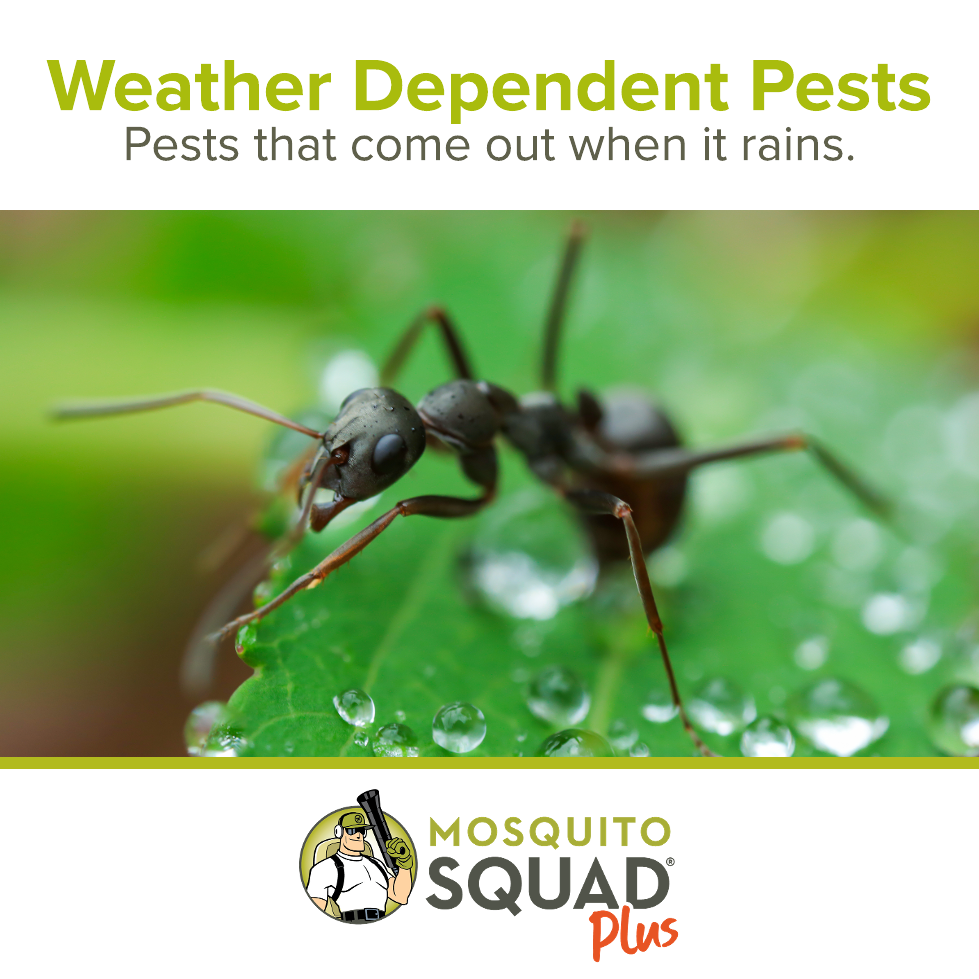
Ever notice more bugs in your home and yard after a rainstorm? You’re not imagining things – pests do come out more after a rainstorm. Some pests are more active because they were disturbed by the rain and had to move to a new harborage site, while the fresh water on the ground actually energizes others. In either case, rain leads to pests, and pests lead to less peace of mind! Keep an eye out for these four weather-dependent pests the next time rain is on the forecast.
Ants
Ants and fire ants are proficient nest builders. Thanks to their complex architecture, light showers and sprinkles of rain do little to disrupt ant hills. However, when heavy rainstorms lead to flooding and over-saturated ground soil, ants are often flushed out of their nests and forced to seek shelter elsewhere. And what better place to go and escape the rain than in your home!
Though it's tempting to remove every single ant you see, it's often less effective to squash them one by one than it is to prevent them from getting inside. Check your home for unwanted entry points and address them accordingly (patch up holes, add door sweeps to entrances, or schedule major home repairs to keep pests out!). Additionally, seal food in tight containers to prevent ants from foraging in your home.
Flies
Flies thrive after a rainstorm. Flies, such as house flies, flesh flies, and even fruit flies, feed on moist, decaying organic matter. Even grosser, flies also lay their eggs in the material they feed on. Whether it's moisture building up in your garbage bins, pet food left outside that becomes mushy, or dog droppings scattered around your yard, flies will take over these areas, and eventually your yard and home.
The best way to prevent a fly problem and address an ongoing one is to find the source they’re feeding and breeding on and remove it. Inspect your yard carefully for any decaying, organic matter that could be attracting and sustaining flies. Check especially in areas where these sources can hide: under porches, in wood piles, near recycling bins, and in gardens.
Mosquitoes
This one might not be a surprise. After a rain event, be it light showers or a full-on thunderstorm, mosquito swarms follow not far behind. Like flies, mosquitoes depend on areas of moisture, specifically stagnant water. Mosquitoes are semi-aquatic organisms and require stagnant water to lay their eggs and develop into larvae. The more standing water in an area, the more mosquitoes there will be.
To prevent mosquitoes after it rains, reduce the areas where standing water can collect. Clean out gutters, downspouts, and drains, and tip out any standing water you find. Objects left in yards, such as flower pots, children's toys, wheelbarrows, bird baths, and pet bowls, can accumulate standing water and provide mosquitoes with breeding grounds.
Roaches
Similar to ants, roaches are not so much attracted to rain as they are displaced by it. Roaches that live outside (essentially roaches other than German cockroaches) tend to live and hide in dark, damp areas like sewer drains, leaf litter, and wood piles. When it rains, and these areas flood, roaches are forced out of their hiding spots and begin searching for new places to dry off and warm up… usually in our homes!
Preventing roaches requires the same steps as preventing ants and other crawling insects from invading your home: seal up any unwanted entry points. While ants may trail into kitchens in search of food, roaches may infest the home in search of quiet, dark places to live. Check attics, basements, crawl spaces, and garages for unwanted entry points and signs of roach activity.
April Showers Bring More Pests
Even when the weather is unpredictable, rest assured, Mosquito Squad Plus has your back. Our traditional and natural barrier treatments help protect your yard from pests year-round. Call a Squad near you today to learn more about our general pest control services and receive a free quote! Services vary by location.