
How to Help Get Rid of Mice: Simple Steps that Actually Work
Posted by Emma Grace Crumbley, Entomologist
January 14, 2026
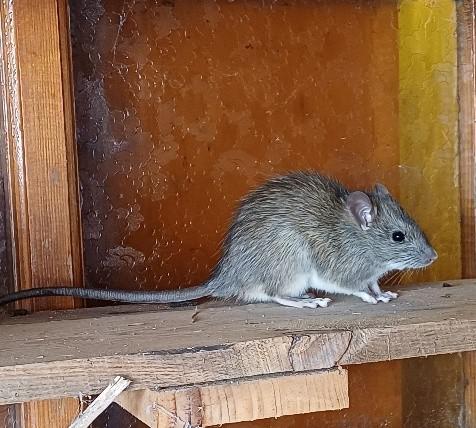
Mouse infestations are annoying and can pose serious health and sanitation risks. Spot an infestation early and follow these simple steps to stop it in its tracks.
Step 1: Find the Entry Points
The house mouse (Mus musculus) is aptly named for its affinity for infesting houses. Of the three commensal rodents, mice are the smallest, usually measuring about 4 to 6 inches from snout to tail with pointy snouts, large, round ears, and a long tail. Using their small bodies and determination, house mice can squeeze through gaps as small as a dime to reach areas with food, water, or shelter. This means that gaps around doors and windows, holes around utility penetrations, and cracks in your home's foundation can all provide entry ways for mice to get inside.
Once you find the entry points house mice are using to get inside, seal them up! The fewer ways they have to enter your home, the less severe your mouse problem becomes.
Step 2: Remove the Food
Contrary to popular belief, mice do not have an affinity for cheese! Though cartoons have largely led us to believe that mice and cheese are a perfect pair, real-life mice prefer carbohydrate-rich foods such as grains, seeds, crackers, and cereals. This doesn’t mean a mouse won’t eat cheese if it’s presented to them. But when foraging in and around your house, these pests are more likely to look for other foods instead.
Keep grains and dry foods sealed in rigid plastic or glass containers to prevent mice from gnawing through the packaging. This includes pet food and bird food that may be stored in the basement or garage. By removing these open food sources, you are making your home less attractive to mice and discouraging them from entering.
Step 3: Find their Nest
House mice are small-range foragers. A house mouse will seldom travel further than 30ft away from their nest to find food, meaning the mice infesting your home are either also nesting in it or nesting very close by. Mice use paper debris, packing materials, fabric scraps, and straw to build their nests and keep them cozy. If you start to see these materials strewn about your home, the nest may be somewhere inside. In your yard, mice will build their nests in shallow burrows, unused wood piles, old sheds, or even in old appliances like wheelbarrows and grills that haven’t been used in a while.
Finding the nest will help speed up the control plan when a pest management professional gets to the scene. Which brings me to our last step…
Step 4: Call in the Pros
A mouse problem is hard to DIY. Don’t let mice turn your home into theirs – call the pros at Mosquito Squad Plus! Mosquito Squad Plus offers a comprehensive rodent control service that helps manage existing infestations and prevent future problems. When you work with Mosquito Squad Plus, our trained technicians will thoroughly inspect your property to identify evidence of rodents and develop a customized plan that meets your pest problem’s needs.
No one wants a mouse in their home, let alone a mouse infestation. Take the guesswork out of pest work with Mosquito Squad Plus. Services vary by location.
For more information on mouse infestations, click here!