What Does a Wasp Nest Look Like
Posted by Emma Grace Crumbley, Entomologist
April 9, 2026
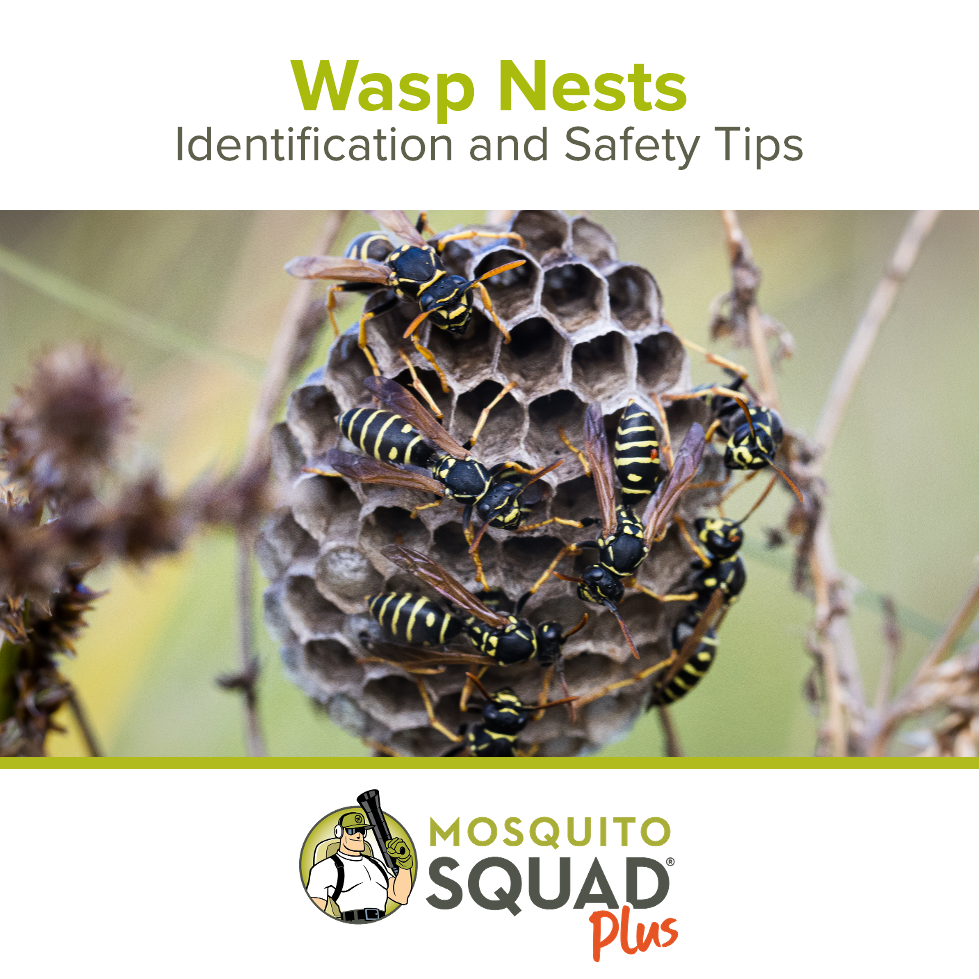
Not all wasps are dangerous, but it can be hard to tell passive wasps from aggressive wasps if you’re not sure which wasps you’re dealing with. Thankfully, no two wasp nests look exactly alike, and identifying a wasp by its nest is a great way to decide what your next steps should be control-wise. Here are 5 wasps to look out for around your yard:
1. Bald-Faced Hornets
Named for the black patch on their otherwise white heads, bald-faced hornets are a common pest of residential structures. These wasps are larger than yellow jackets but just as aggressive and territorial. Bald-faced hornets also have smooth stingers and will sting more than once.
You’ll recognize a bald-faced hornet nest by its large size and papery appearance. These nests are built about three feet above the ground in trees, shrubs, sheds, and houses, and some nests are as large as basketballs. Just like with yellow jackets, use an abundance of caution when approaching these nests.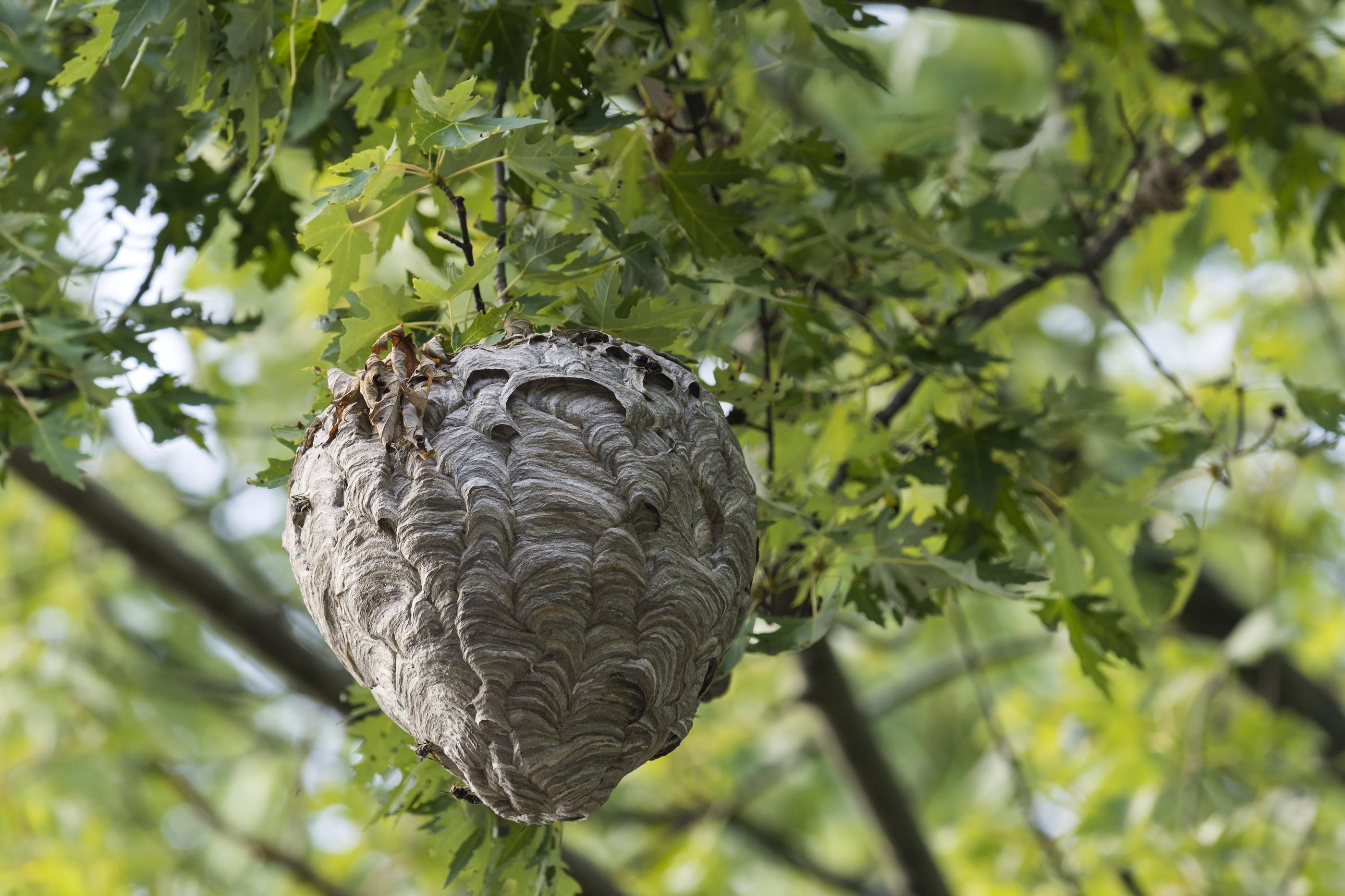
2. Mud Daubers
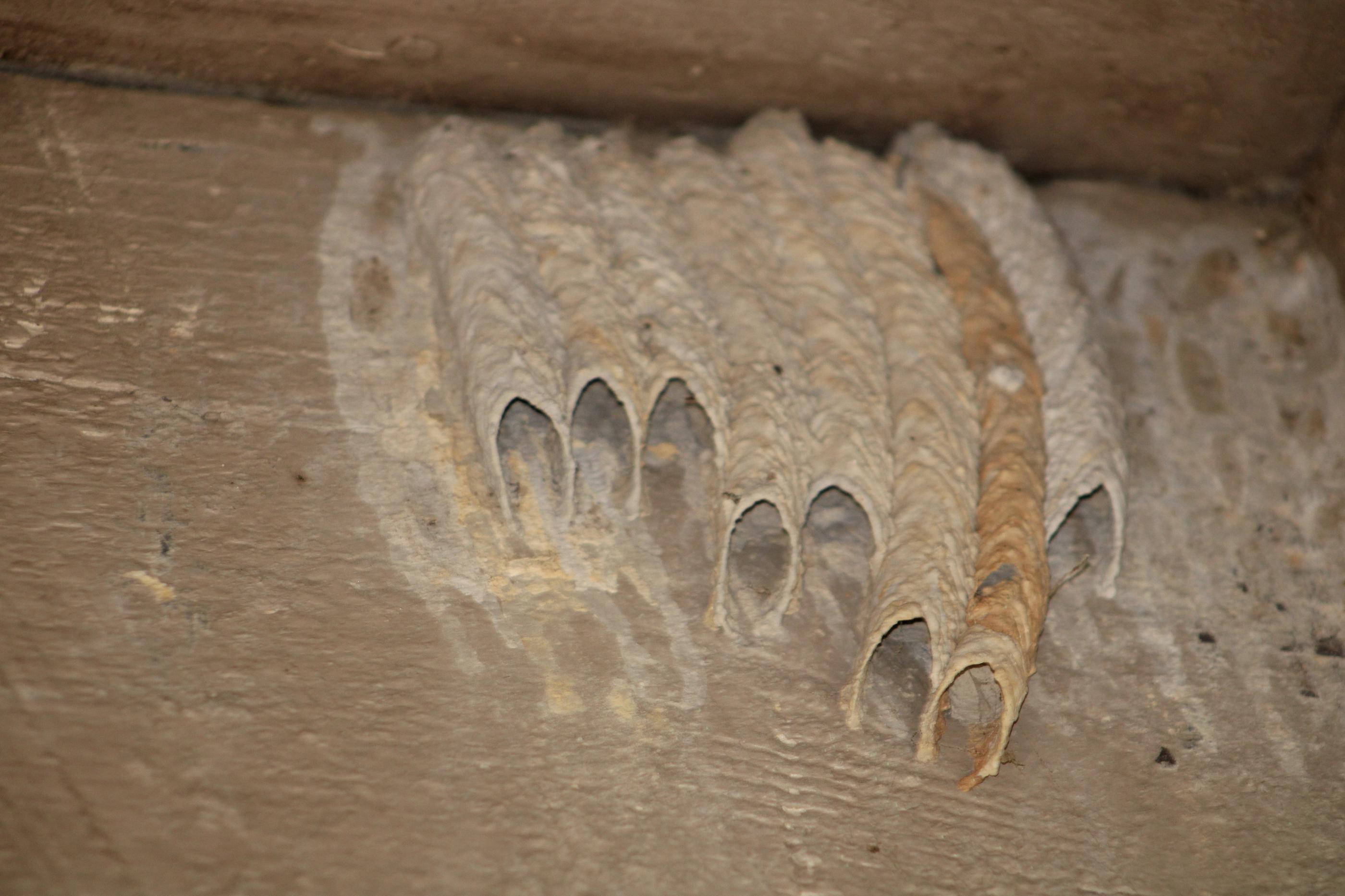
Mud daubers are solitary wasps that do not live in large colony nests. These wasps live in small nests made of mud. Though many can infest the same area, each mud nest is home to only one wasp. These wasps build their nests in the eaves of structures, on porches, and occasionally in attics. Their mud nests look like long, tubular organ pipes. Mud daubers are not aggressive wasps, though they will sting if threatened.
If you see mud tubes along the outside walls of your home with clear entry holes, you likely have mud daubers. Be sure you don’t confuse these muddy nests with termite mud tubes, which are thinner and extend from the soil and along walls.
3. Paper Wasps
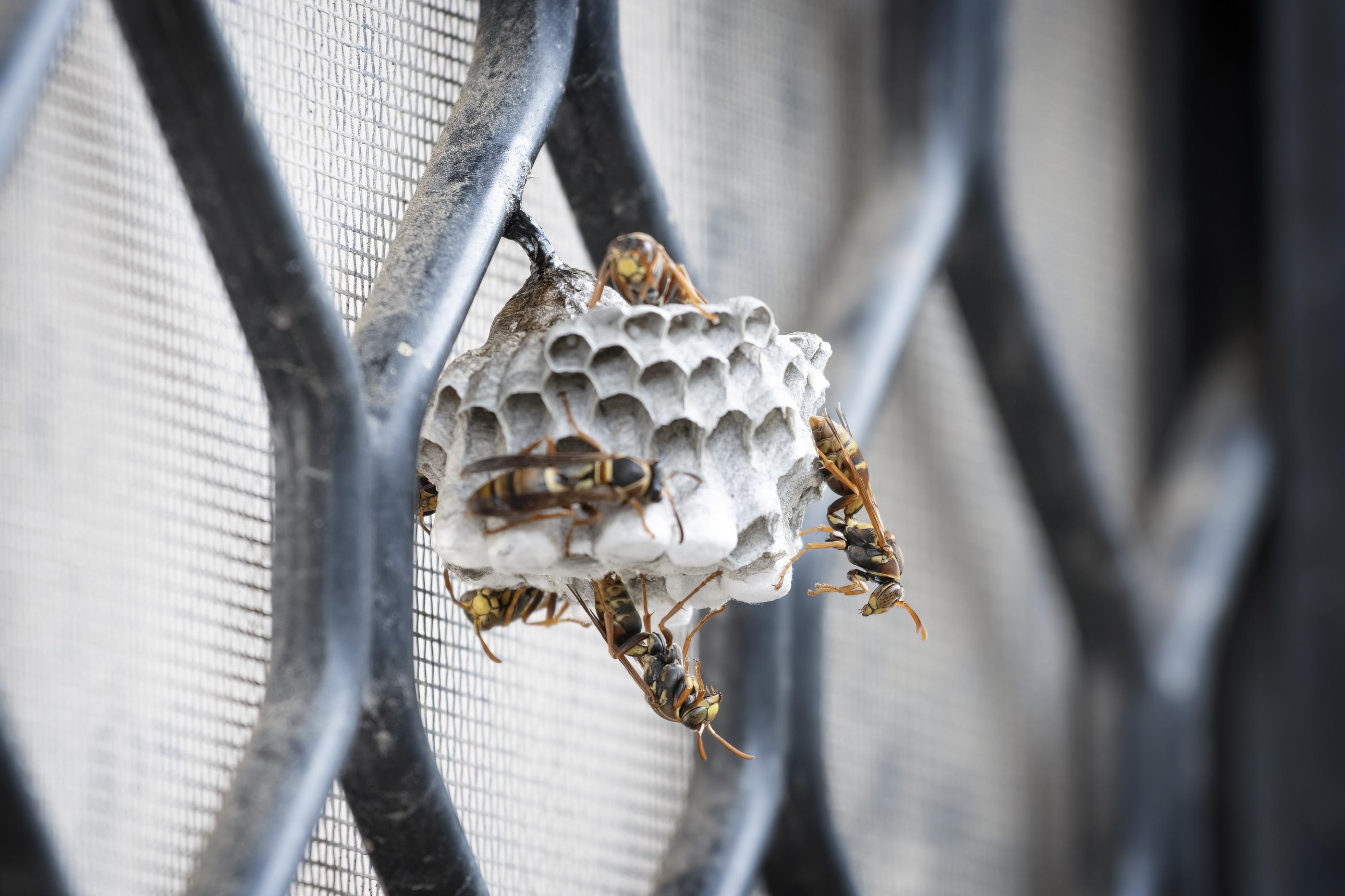
Paper wasps are common pests in residential yards. These wasps get their name from the papery appearance of their nests, which are made of plant fibers mixed with wasp saliva. Paper wasp nests can be built in several places, from shrubs to trees to ceiling corners. Though not aggressive, these wasps will readily sting anything threatening their hives.
You may have a paper wasp nest if you see exposed nests with lots of honeycomb-shaped cells. Some people say paper wasp nests resemble upside-down umbrellas as they hang from a single stalk.
4. Yellow Jackets
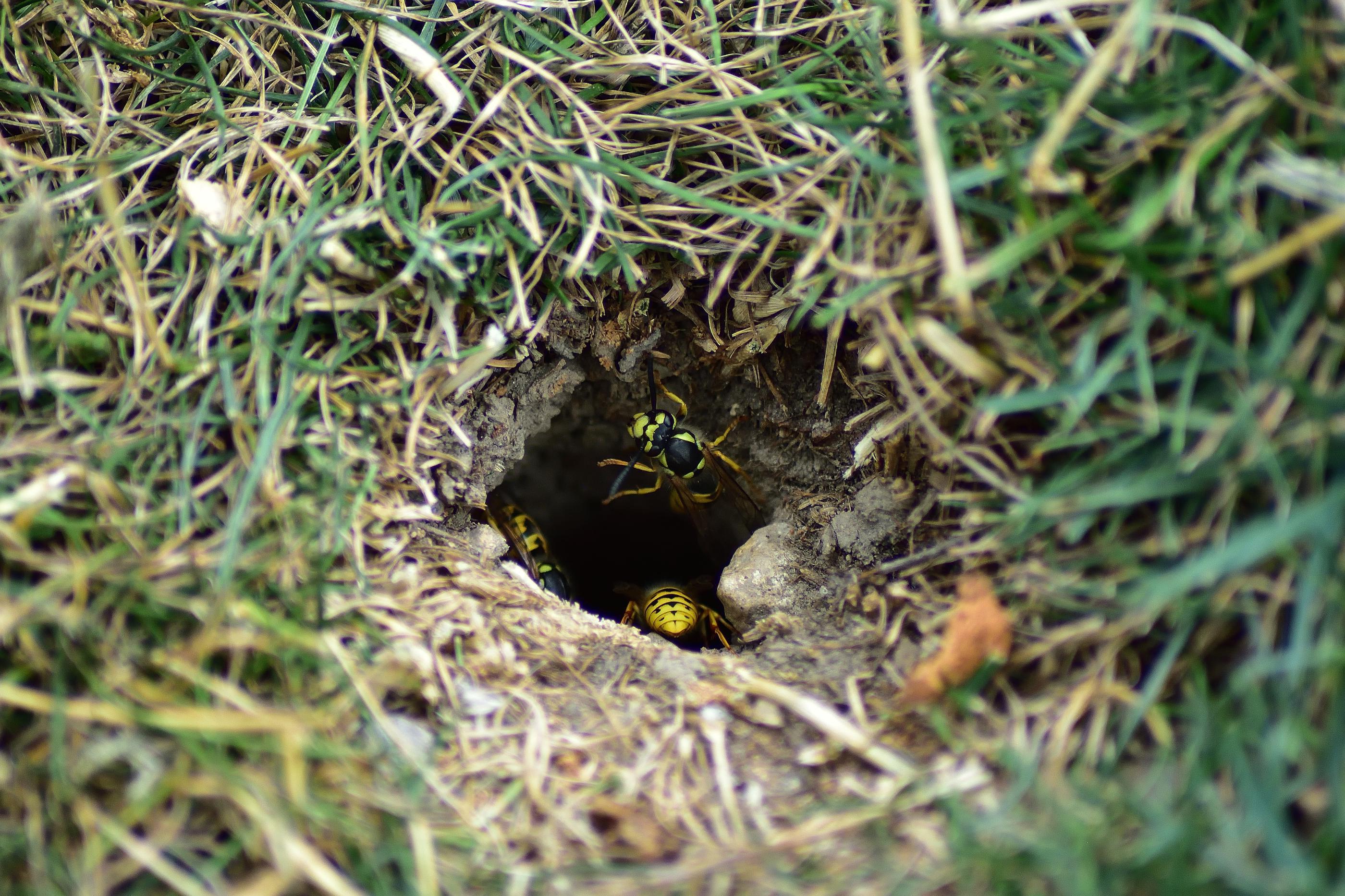
Yellow jackets are aggressive wasps and highly territorial. Their smooth stingers allow them to sting more than once, and yellow jacket colonies are large, with successful nests reaching nearly 4,000 individuals. They are typically ground-dwelling wasps, though they can establish in less disturbed areas such as attics or eaves.
When deciding if you’re dealing with a yellow jacket nest, look for a hole in the ground with yellow jackets flying around it. Cavities in wood, soil, or walls with a single opening can serve as nesting sites. Usese an abundance of caution when inspecting for these nests, as you wilmost often l see the wasps themselves before their nesting areas.
5. Yellow Legged Hornet (Invasive)
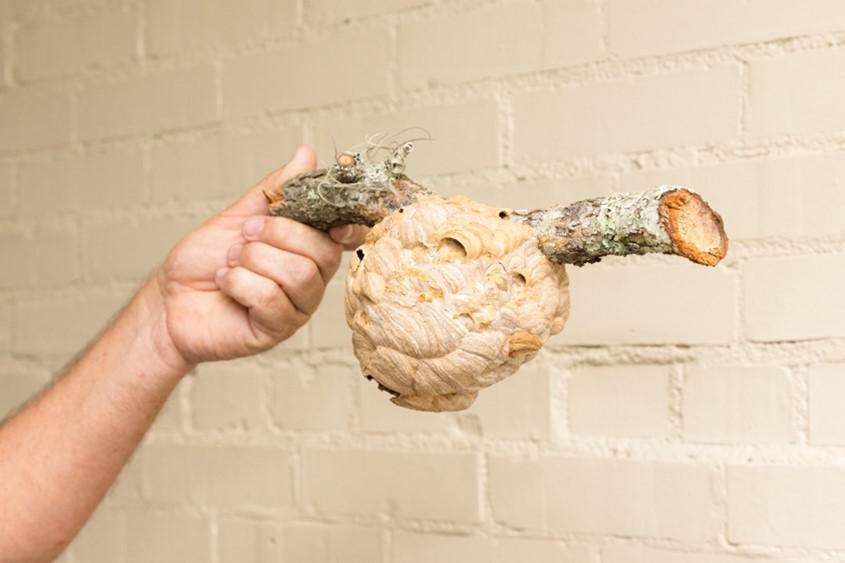
The yellow-legged hornet, also known as the Asian hornet, is an invasive wasp native to Southeast Asia. This wasp was first detected in the US in 2023. While this wasp can pose a threat to people and pets through its stings, entomologists are more concerned about its risk to beehives, both native and domestic. Yellow-legged hornets are predators of honeybees.
Their nests are constructed above ground, usually in trees on branches. As the year goes on, if these nests are undisturbed, they will grow from tennis-ball-sized nests to watermelon-sized colonies. Yellow-legged hornets are highly aggressive, though current sightings have not spread beyond Georgia and South Carolina. If you suspect you have yellow legged hornets, report them to your state’s Department of Agriculture.
Wasp Nest… What Next?
So you saw a wasp nest in your yard… now what? Thankfully, the technicians at Mosquito Squad Plus are here to help. Whether it's assisting you with an identification, inspecting your lawn for problem areas, or performing a wasp control service, Mosquito Squad Plus’s comprehensive pest control solutions help you protect your property from pests and take back your outdoor spaces. Services vary by location.