
Termites vs Ants: How to Tell the Difference
Posted by Emma Grace Crumbley, Entomologist
April 8, 2026
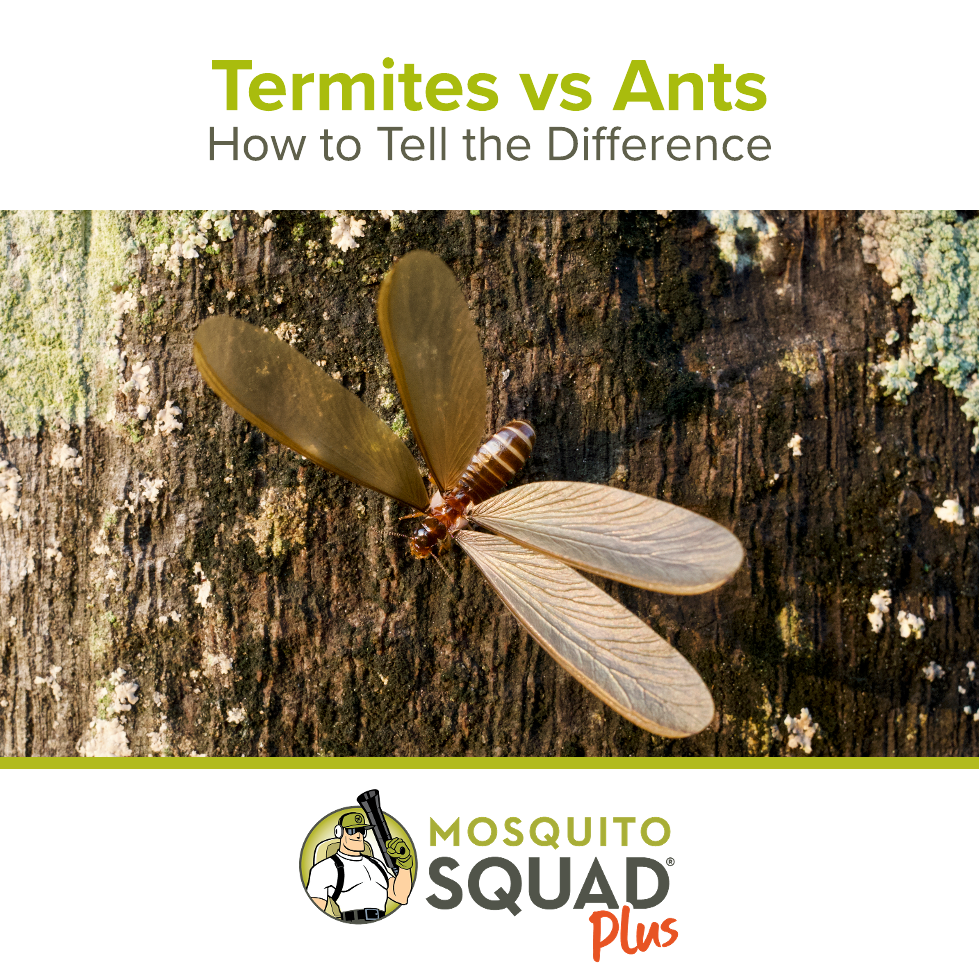
Spring is swarm season, which means termites and ants are leaving their colonies to find mates. Flying termites and flying ants have a lot of things in common - but don’t get them confused, or you might overlook signs of a severe pest infestation.
Similarities Between Ants and Termites
Ants and termites share many similarities, which can make identifying and treating either challenging. Carpenter ants, especially, can be confused with termites as they also chew through wood, infest homes, and swarm at the same time as termites.
Both termite and ant colonies are divided into castes: workers, soldiers, and reproductive adults. In addition to kings and queens, the primary reproductive members of their colonies, termites and ants, also have sexually mature, winged adult members called alates. These winged alates are the ones that actually leave their nests in search of new mates to establish new colonies with. After successfully mating, both termite and ant alates shed their wings and begin building their new nests.
When you look at a termite alate and an ant alate, they may seem very similar at first. Both have long wings that cover their abdomens, and both are about the same size from head to abdomen, usually about a half-inch long. When either insect is swarming, it can be hard to tell which is which. However, upon closer inspection, there are a few key differences between termite and ant alates.
Differences Between Ants and Termites
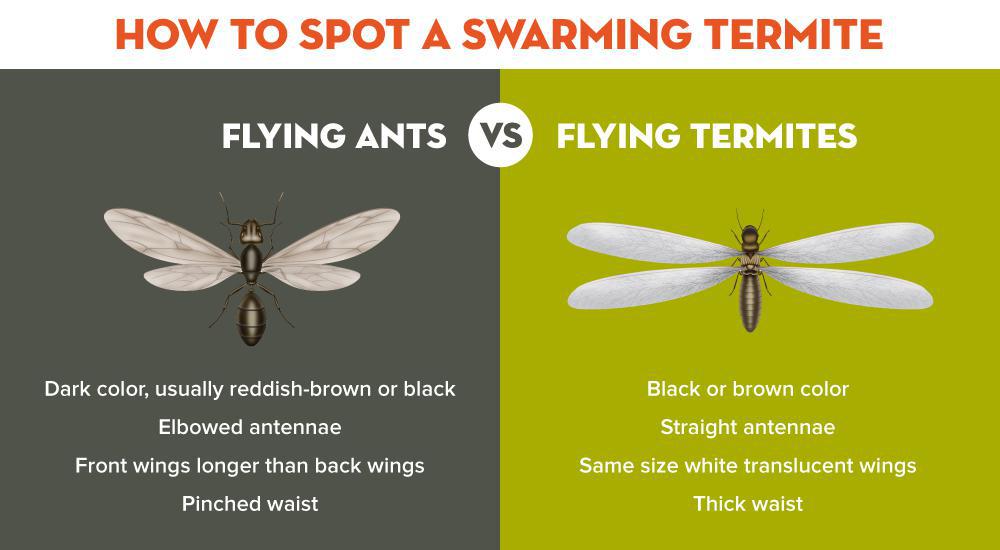
First, you can look at their bodies. Ants are members of the order Hymenoptera, the same order as bees and wasps. Ants, bees, and wasps all share one physical similarity: they have a "wasp waist", meaning the area where the thorax and abdomen connect becomes slim, creating an hourglass shape. Termites do not have the same waist. Instead, they have longer, chunkier bodies with less obvious division between the body segments.
Ants and termites also have distinctly different antennae. The shape and length of an ant's antennae can vary by species. Still, in general, ants have "elbowed" antennae (geniculate), which appear hinged with a joint between the segments that allows them to bend. Termites have straight antennae (moniliform) without bends that are usually smaller than an ant's antennae.
Finally, ant wings are uneven in length, while termite wings are uniform. Ants have longer forewings than hind wings, most noticeable in flight. Termites have two pairs of even-length, long wings.
Identification and Pest Management
If you experience a swarm inside or around your home and you’re not sure what you’re dealing with, always try to catch some of the individuals present. Having a reference specimen can help you identify pests calmly and provide pest management professionals with an example in the event an ID is tricky. Notice the body shape, antennae length, and wingspan of the pests. These three features are ultimately the key to determining if you have an ant swarm or a termite swarm. If you only see leftover evidence of swarming, be that discarded or dead individuals, don't throw them all away before inspecting and identifying them. Compare the shed wing sizes and body plans to identify the alates you’re dealing with.
Unfortunately, performing pest control by yourself is highly ineffective and not recommended for either ants or termites. Unlike other pests that can be managed with repellents and increased sanitation around the home, carpenter ants and termites feed on and live in the wood that makes up your house. Finding infestation areas and effectively treating them is a task that should be left to professional pest management technicians.
Fortunately, Mosquito Squad Plus is here to help. Our discreet termite control services help manage existing infestations and prevent future infestations. Mosquito Squad Plus also offers a Squad Home Shield pest package, the best ant control option to deter these pests and keep them away. To learn more about our comprehensive pest control options and schedule your next service, call a Squad near you today and receive a free quote. Services vary by location.